
hexachlorophene


 1
9.9
- noun
- /ˌhɛksəˌklɔːrəˈfiːn/
- Specialized
- Is hexachlorophene safe for daily use?
Examples
-
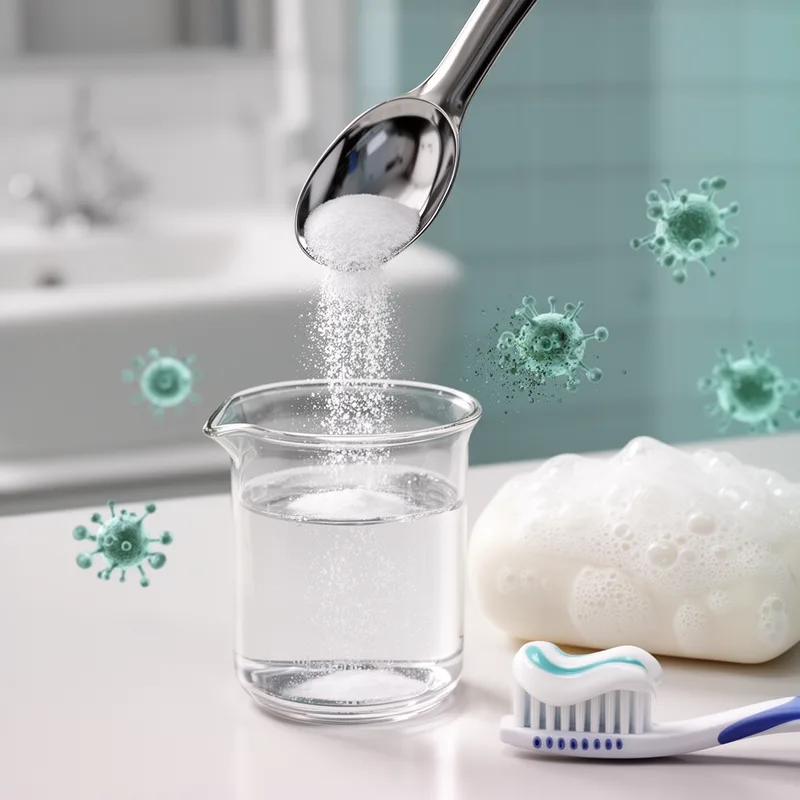
The doctor recommended using soap that contains hexachlorophene to help prevent infections.
-
Some toothpaste brands previously contained hexachlorophene as an antibacterial agent.
-
Due to safety concerns, the use of hexachlorophene in consumer products is now restricted.
-
Hospitals once commonly used hexachlorophene in disinfectant products to prevent infection.
-
The doctor recommended using hexachlorophene soap for its antibacterial properties.
-
Many toothpaste brands include hexachlorophene for its antibacterial properties.
-
In the past, hexachlorophene was a common additive in antiseptic products for its effectiveness.
Surface Forms
Morphology
hexachlorophene = hexa + chloro + phene
The parts are chemical combining forms (hexa- 'six', chloro- 'chlorine', -phene relating to a phenyl/phenol core) and the overall sense as a specific antiseptic compound is specialized and not inferable by a typical B1 learner from the components.
Etymology
Hexachlorophene breaks into three parts: hexa- meaning 'six', chloro- meaning 'chlorine', and phene a 'chemical ending'. So the name tells you it is a chemical with six chlorine atoms, which helps explain why it was used as an antibacterial powder in soaps and toothpaste.