
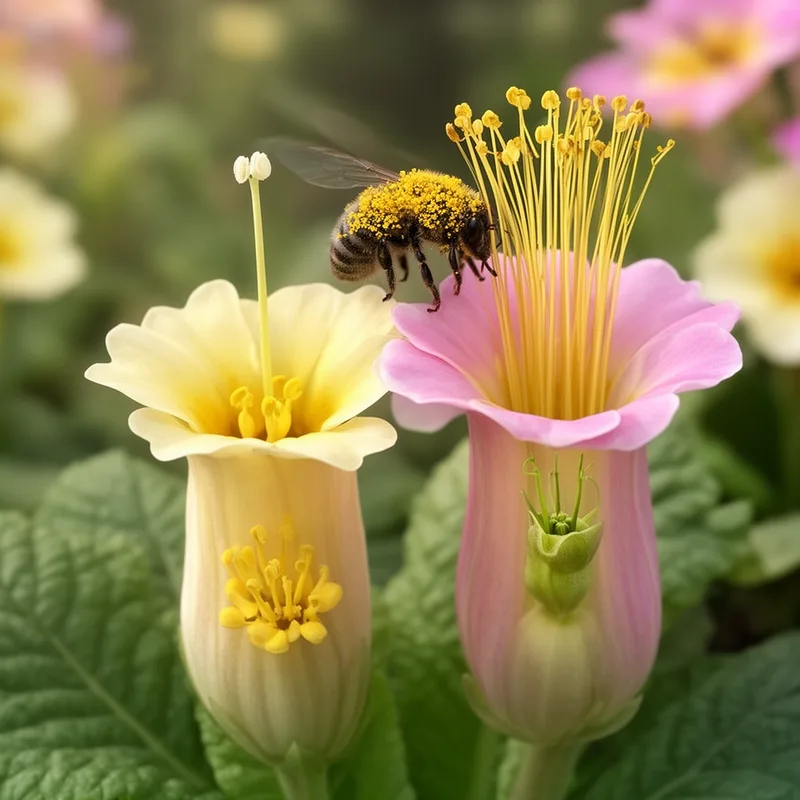
heterostyly


 1
9.9
- noun
- /ˌhɛtəˈrɒstəli/
- Specialized
- Primroses are a classic example of a species that exhibits heterostyly in its flowers.
Examples
-
Some plants use heterostyly to increase the chances of cross-pollination between individuals.
-
Botanists study heterostyly to understand how flower structure affects reproduction.
-
The plant exhibits heterostyly to promote genetic diversity.
-
Many flowering plants show heterostyly as a reproductive strategy.
-
Heterostyly is an important mechanism that ensures genetic diversity by promoting cross-pollination among heterostyly flowers.
-
In the wild, some plants exhibit heterostyly, which allows them to adapt to different pollinators.
-
The phenomenon of heterostyly can be observed in certain species of primrose, where flower shapes vary to facilitate mating.
How Varied
- Specialized
1
9.9

- Specialized
Surface Forms
Morphology
heterostyly = heterostylous (semi-transparent) = hetero + styl + y
The noun is a standard nominalization of the adjective 'heterostylous' (hetero- + styl- + -ous), but it is a specialized botanical term and not immediately clear to general learners.
Etymology
Heterostyly comes from the parts hetero- meaning 'different' and -styl- meaning the flower's 'style', the long part in the middle of a flower. So heterostyly describes flowers of the same species that have different style lengths to help cross-pollination.