
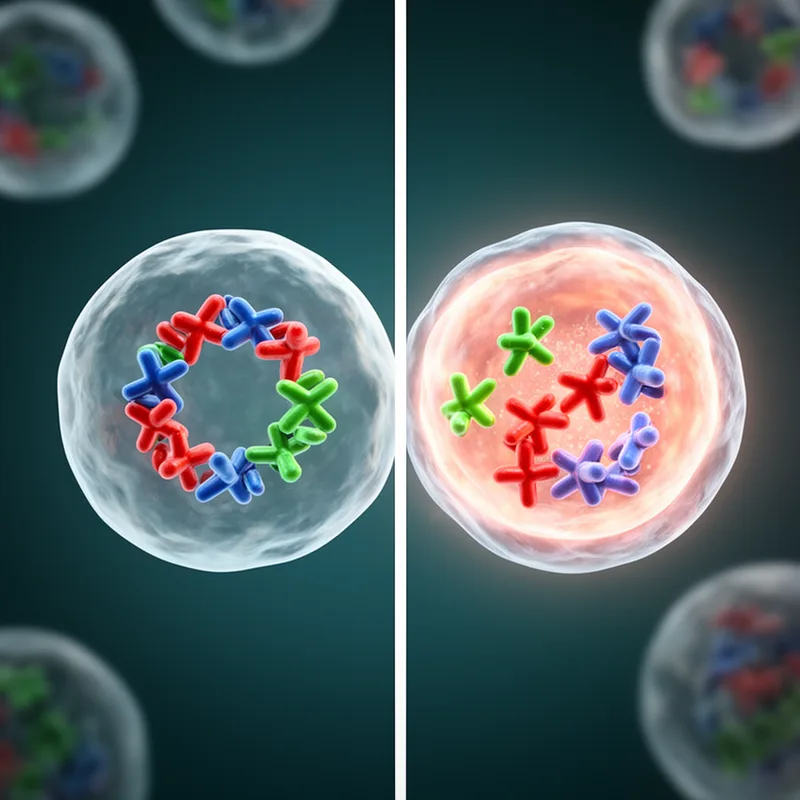
heteroploid
- noun
- /ˌhɛtərəˈploɪd/
- Specialized
- Some cancer cells are classified as heteroploid due to their abnormal chromosome numbers.
Examples
-
Researchers studied the growth patterns of heteroploid strains in the laboratory.
-
Many plants are considered heteroploids due to their complex chromosome structures.
-
A heteroploid can result from irregular cell division during reproduction.
-
A heteroploid organism can exhibit unique genetic traits.
-
Some cancer cells are classified as heteroploid due to their abnormal chromosome numbers.
-
Researchers studied the growth patterns of heteroploid strains in the laboratory.
-
A heteroploid organism can exhibit unique genetic traits.
Surface Forms
Morphology
heteroploid = ploidy (opaque) = hetero + ploid
Although 'hetero-' (different) is recognizable, the combining form 'ploid' and the technical concept of chromosome sets are specialist knowledge, so a B1 learner cannot reliably derive the meaning.
Etymology
The word heteroploid is made from hetero- meaning 'different' and -ploid seen in haploid and diploid, which talk about sets of chromosomes. So a heteroploid is an organism or cell whose chromosome number is 'different' from the usual multiples for its species.

