
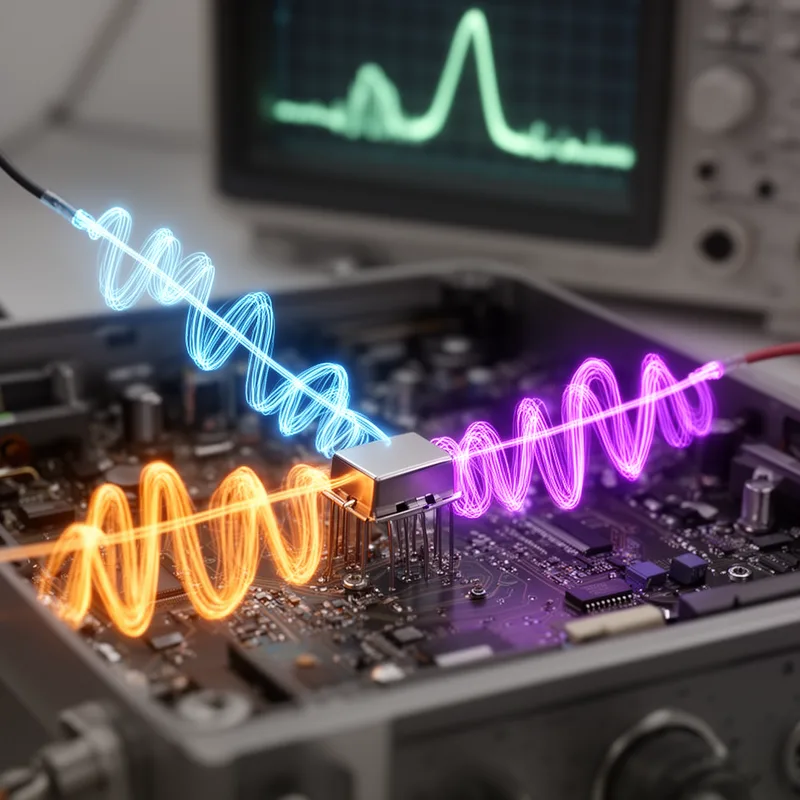
to heterodyne
- verb
- /ˈhɛtərəˌdaɪn/
- Specialized
- To improve sound quality, technicians can heterodyne different audio waves before transmission.
Loading YouTube…
Watch on YouTubeWell, now imagine heterodyning someone's voice onto nerve signals of a background noise.
- Well, now imagine heterodyning someone's voice onto nerve signals of a background noise.
Examples
-
The engineer used a special circuit to heterodyne the incoming signals and extract the desired frequency.
-
And So what we're actually going to get from the heterodyning at the receiver is X of N times all of this.
-
Well, now imagine heterodyning someone's voice onto nerve signals of a background noise.
-
When radio waves are combined through the process of heterodyne, new frequencies are generated that can carry more information.
Synonyms

 142
4.1
142
4.1

Blend two or more sounds into one sound
Compounds

- Specialized
A circuit that makes a radio signal to combine with incoming signals to make new frequencies in radios

- Specialized
A radio that mixes its signal with a received signal to make a lower frequency easier to amplify and hear
Surface Forms
Morphology
Etymology
Heterodyne comes from hetero- 'different' and dyne 'force', as in dynamic. So to heterodyne is to mix two different waves (or signals) to create new frequencies that are the sum or the difference of the originals.