
heterochrony
- noun
- /ˌhɛtəˈrɒkrəni/
- Specialized
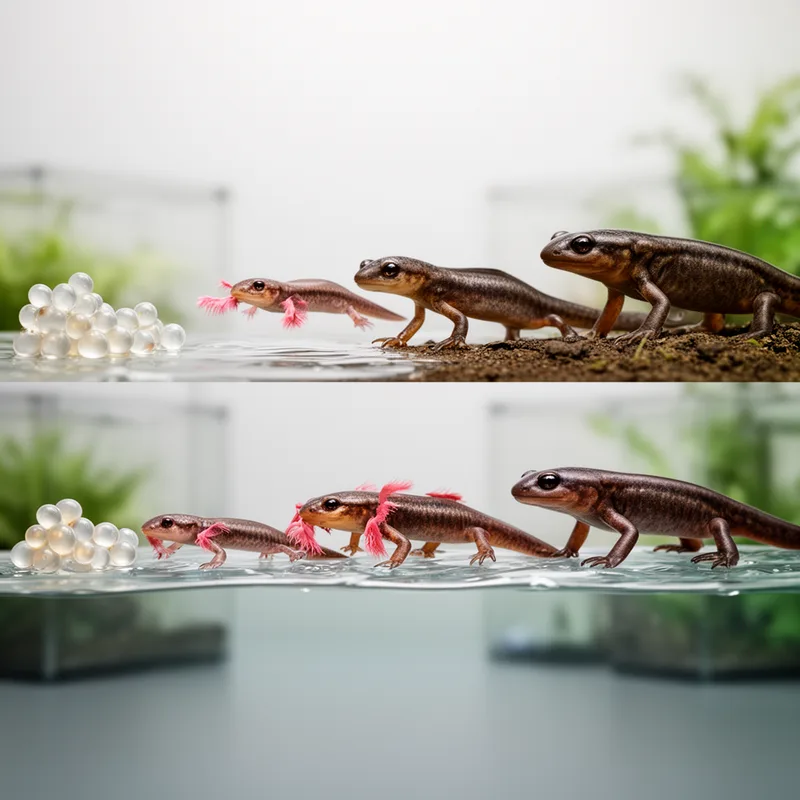
- One mechanism that has often been invoked to explain evolutionary change is heterochrony—when a species undergoes changes in the relative timing of developmental events in comparison to its ancestors.
Examples
-
In some cases of heterochrony, reproductive organ growth outpaces the development of other tissues.
Academic text (1996) -
Heterochrony is an intuitively attractive mechanism to explain some evolutionary changes, but actually showing that it has occurred is no easy matter, notes Kathleen Pryer, a botanist at the Field Museum of Natural History in Chicago.
Academic text (1996) -
Pryer has been able to meet both requirements in her studies of the role of heterochrony in the evolution of a family of aquatic ferns, the Marsileaceae.
Academic text (1996) -
In some cases of heterochrony, reproductive organ growth outpaces the development of other tissues.
-
The concept of heterochrony helps scientists understand how developmental timing can lead to the diverse forms of life we see today.
-
Research into heterochrony reveals how changes in developmental rates can influence evolutionary pathways.
Antonyms


How Synchronous


Surface Forms
Morphology
heterochrony = hetero + chron + y
The elements are Greek combining forms ('hetero-' 'chron-') and the term denotes a technical evolutionary/developmental concept that an average B1 learner cannot derive from the parts.
Etymology
Heterochrony comes from Greek parts hetero- 'different' and chron- 'time', so it literally means 'different time'. So when the timing of growth changes, for example a body part growing earlier or later, an animal may keep young features or develop new ones, and that can lead to new species.