
hemocyte


 1
9.5
- noun
- /ˈhiːməˌsaɪt/
- Specialized
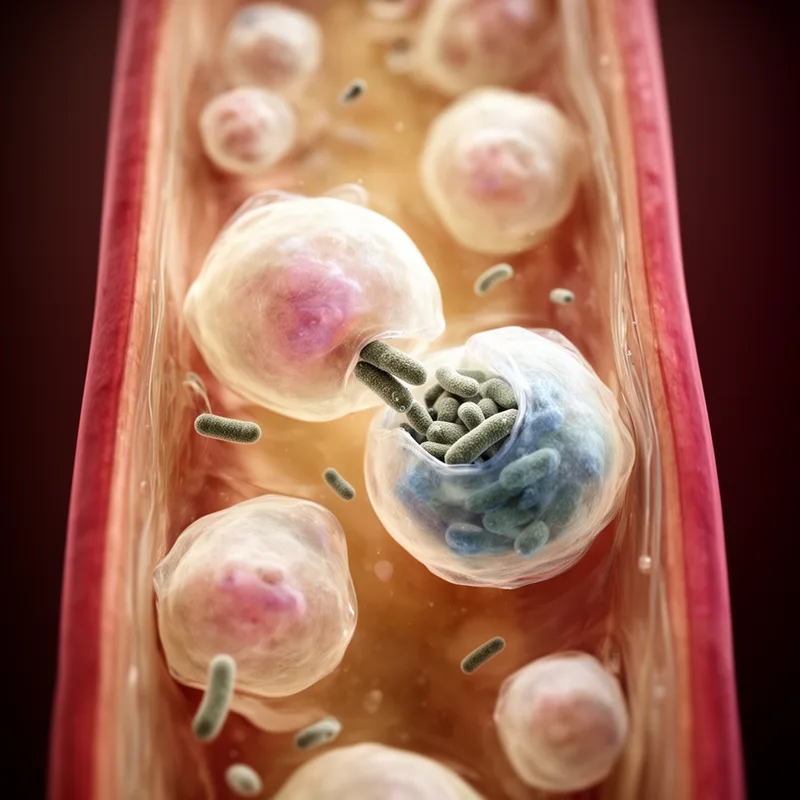
- During encapsulation, specialized hemolymph cells called hemocytes become attracted to an invader, such as the larva of a conopid fly.
Examples
-
The hemocytes are crucial for the immune response in invertebrates, helping to protect them from infections.
-
As the hemocytes attach to its surface and aggregate, the proPO cascade is activated.
Academic text (2003) -
The resulting melanin acts as a kind of mortar that cements hemocyte "bricks" in place around the larva.
Academic text (2003) -
Hemocytes may mediate fibronectin (FN)-like fibril formation in the shell matrix as they do in ECM.
Blog text (31) -
The role of hemocytes in combating pathogens is essential for maintaining the health of the organism.
-
Researchers are studying how hemocytes react during an infection process to better understand invertebrate immunity.
Surface Forms
Morphology
hemocyte = hemo + cyte (opaque) = hemo + cyte
Built from Greek combining forms 'hemo-' and '-cyte' which are technical and not transparent to an average B1 learner.
Etymology
The word hemocyte comes from two Greek parts: hemo- meaning 'blood', as in hemoglobin, and -cyte meaning 'cell'. So a hemocyte is literally a 'blood cell', which is why we use the word for the cells in animals like insects and crabs that help fight infection.