
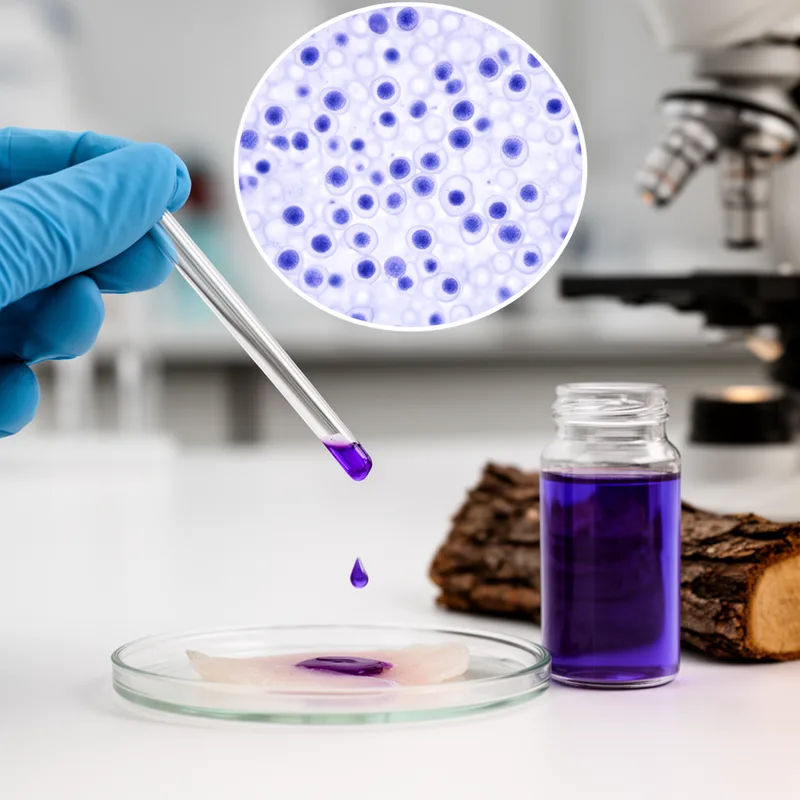
hematoxylin


 1
9.9
- noun
- /ˌhɛm ə ˈtɒk sɪ lɪn/
- Specialized
- The routine diagnosis was made on Hematoxylin and Eosin (H&E) stained sections.
- hematoxylin-eosin
- stained with hematoxylin
- routine hematoxylin
Examples
-
The tissue samples were stained with hematoxylin to enhance the visibility of cell nuclei under the microscope.
-
Vessels were cut open and photographed; histological slides were prepared and stained with hematoxylin and eosin.
Academic text (2015) -
There were no significant changes found on routine histology using hematoxylin and eosin.
Academic text (2015) -
Liver sections were stained with hematoxylin and eosin.
Academic text (2014) -
At the last step, the tissue sections were counterstained with hematoxylin dye. Statistical Analysis:
Academic text (2015) -
Tissue sections were counterstained using hematoxylin and mounted in xylene.
Academic text (2017) -
For overall morphology, sections were stained with hematoxylin and eosin (H&E) to measure mean fiber area.
Academic text (2011) -
Tissue samples were fixed in 4% formalin before staining with hematoxylin and eosin for histopathologic examination.
Academic text (2015) -
Diagnosis of ALCL is made by hematoxylin and eosin histology and immunochemistry for the CD30 marker.
Academic text (2015) -
The acellular laminated layer appeared convoluted, and eosinophils were seen after staining with hematoxylin and eosin.
Academic text (2015)
Surface Forms
Morphology
hematoxylin = Haematoxylum (opaque) = hemato + xyl + in
Formed from Greek combining forms ('hemato-' 'xyl-') and a chemical suffix '-in'; these are not productive standalone English words for average B1 learners and the term is a specialized scientific name.
Etymology
Hematoxylin comes from Greek parts hema- meaning 'blood' and -xylin meaning 'wood', because the dye was first made from a logwood sometimes called 'bloodwood'. That's why hematoxylin is the name of a plant dye used in labs to colour cell parts under the microscope.