

hematopoiesis
- noun
- /ˌhɛmætəˈpɔɪəsɪs/
- Specialized
- Hematopoiesis is a multistep process that leads to the production of mature blood cells and is controlled by many factors, including microRNAs.
Examples
-
Finally, all of the 130 slides to be analyzed were graded for bone formation and hematopoiesis (marrow formation) on a scale of 1-4 by 3 "blinded" researchers.
Blog text (19) -
This manipulation affects the transition from primitive to definitive hematopoiesis.
Academic text (2013) -
He started with the construction of the ribs and the hematopoiesis.
-
Second, myelosuppression and suppression of hematopoiesis occur in the context of IFN-? secretion, possibly causing fatal immunopathology.
Academic text (2007) -
RUNX1 (also known as AML1) is involved in the development of normal hematopoiesis as well as leukemia (Kumano and Kurokawa 2010).
Academic text (2012) -
Under normal conditions, Janus kinases (JAK1, JAK2, JAK3, and tyrosine kinase 2) play important roles in hematopoiesis (development of blood cells) and regulation of the immune system.
Blog text (28) -
Hematopoiesis occurs primarily in the bone marrow, where blood cells are formed and developed.
-
The study focused on understanding how hematopoiesis contributes to the overall health of an individual.
-
Understanding the mechanisms of hematopoiesis is crucial for developing treatments for blood disorders.
Synonyms


 1
9.9
1
9.9
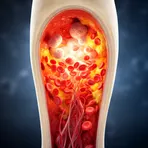
The making of blood cells in the body, especially in bone marrow

The making of new blood cells in the body, usually in bone marrow
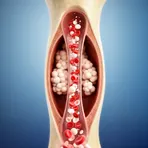
The process in the body that makes blood cells in the bone marrow
Surface Forms
Morphology
hematopoiesis = hemato + poiesis
A specialized medical term built from Greek combining forms ('hemato-' = blood, '-poiesis' = formation) that are not standalone English words and will be opaque to an average B1 learner.
Etymology
Hematopoiesis comes from old Greek words haima 'blood' and -poiesis 'making', and the haima part is the same as in hemoglobin. So, hematopoiesis is the body's process of 'making blood', especially in the bone marrow.