
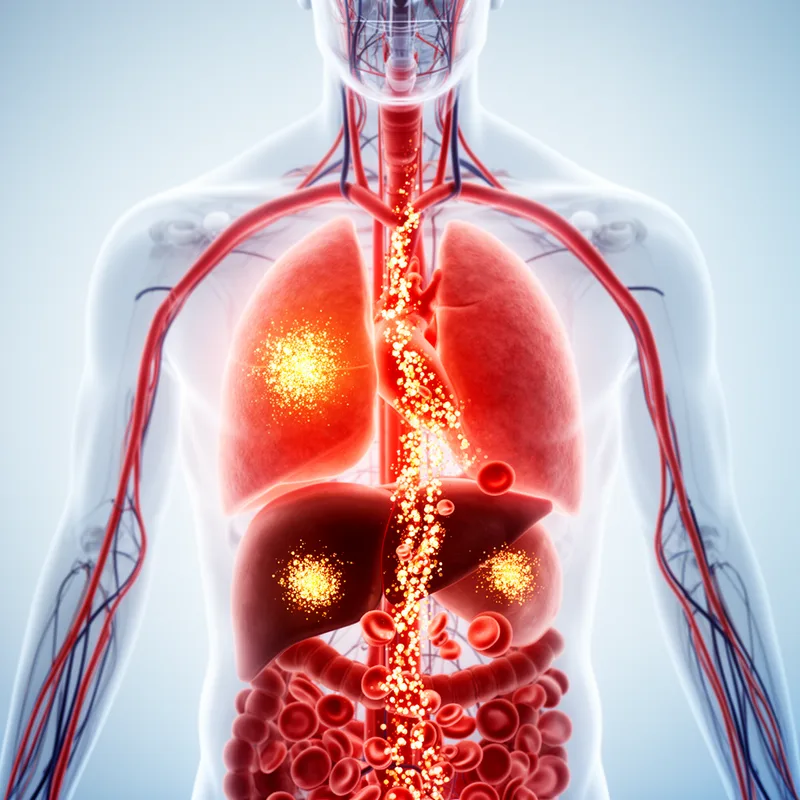
hematogenous


 1
9.3
- adjective
- /ˌhɛməˈtɒdʒənəs/
- Specialized
- The spine is a common site of hematogenous infection.
- hematogenous spread
Examples
-
Hematogenous spread is the most common route of entry, but it can also be caused by direct inoculation, trauma, surgery, and contiguous spread of adjacent tissue infection.
Academic text (2004) -
The primary mode of tumor spread is hematogenous.
Academic text (2004) -
The hematogenous route is the most likely route of spread.
Academic text (2001) -
The vertebrae are a common site of hematogenous infection.
Academic text (2005) -
The pneumonic form can be caused by inhalation or by hematogenous spread of the pathogen from other sites.
Academic text (2003) -
Metastases are usually hematogenous.
Academic text (2007) -
The interval between hematogenous dissemination and the development of roentgenographic evidence of nodules may be several weeks.
Academic text (2007) -
Moreover, it could be useful to use neoadjuvant antiandrogen therapy before radical prostatectomy to decrease or suppress the hematogenous spread of malignant prostatic cells during surgery.
Academic text (1995) -
Infections often occur through hematogenous spread, allowing pathogens to circulate through the bloodstream.
-
The doctor explained that the hematogenous route is crucial for understanding how the disease spreads within the body.
Surface Forms
Morphology
hematogenous = hemato + gen + ous
This is a learned medical formation meaning 'originating in the blood'; the parts are identifiable, but the full sense is specialized and not fully guessable for an average learner.
Etymology
Hematogenous comes from the Greek root haima meaning 'blood' and the root gen meaning 'to produce', the same 'gen' you see in generate. So, hematogenous describes something that begins in or is carried by the blood.