

hecatomb


 1
9.9
- noun
- /ˈhɛkəˌtoʊm/
- Literature
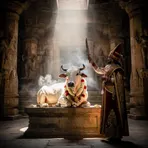
- In ancient Greece, a great public sacrifice known as a hecatomb involved the slaughter of 100 oxen to please the gods.
Examples
-
The army's failed campaign resulted in a hecatomb of soldiers lost in battle, highlighting the dire consequences of war.
-
A hecatomb is, literally, a massive sacrifice involving the slaughter of 100 oxen—a reference to ancient Greek and Roman practices.
Academic text (1990) -
During the festival, the mayor declared a hecatomb to commemorate the town's founders with a large public feast.
Synonyms
 143
5.8
An act of killing an animal or person as an offering in a religious ceremony
 6
9.9
Killing a person or animal by burning to offer as a sacrifice
 4
9.3
A large-scale killing of people during war or political violence
Antonyms


How Massive

Surface Forms
Etymology
Hecatomb comes from old Greek words hekaton and bous, meaning 'hundred' and 'ox', because the ancient Greeks once offered about a hundred oxen in one great sacrifice. So, hecatomb now means a very large destruction or loss of life and is used as a strong image for massive disaster.