
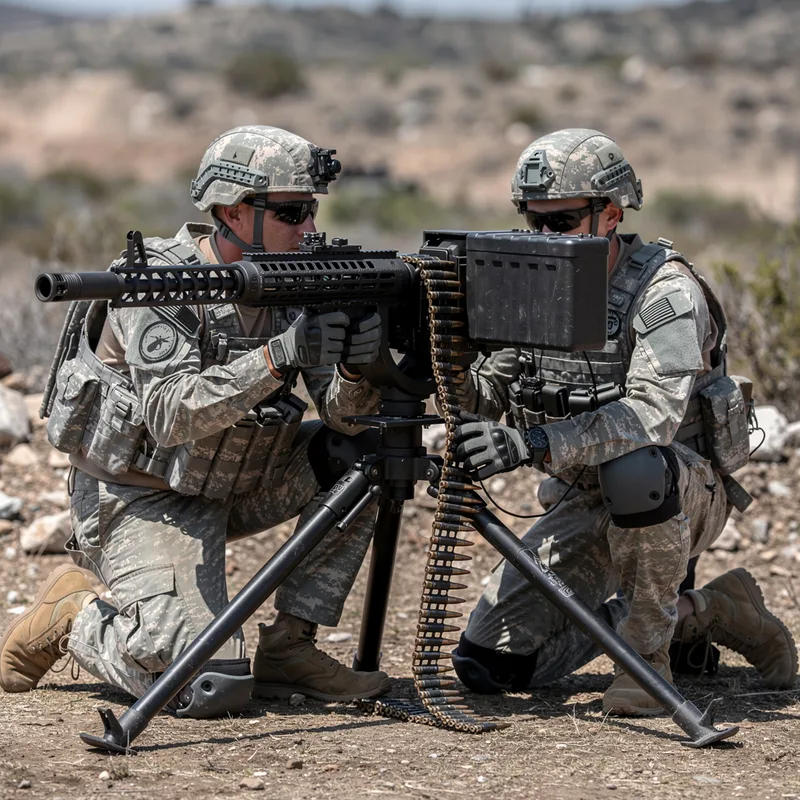
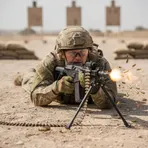
heavy weapon
 15
5.2
15
5.2

- noun
- /ˈhɛvi ˈwɛpən/
- Specialized
- The soldiers transported heavy weapons to the front lines for the upcoming battle.
Loading YouTube…
Watch on YouTubeHis armies are better equipped with heavy weapons, tanks and planes, but his Manchurian conquest looks lost.
- His armies are better equipped with heavy weapons, tanks and planes, but his Manchurian conquest looks lost.
- Once those heavy weapons are on the battle lines, we'll see if Ukrainians cannot just defend, which they've proven they're able to do in breathtaking fashion.
- I mean they said, hey, you guys are Bravos, which is just basic infantry, you guys are Charlie's, which is mortar men and you guys are hotels, which is heavy weapons.
- I set up the network and we were, you know, operating on other projects to get, you know, heavier weapons and things like that.
Examples
-
You're a heavy weapons specialist.
-
No specific group claimed responsibility for the attack, which was well orchestrated and involved heavy weapons.
Blog text (28) -
We're getting our heavy weapons.
-
Should we break out the heavy weapons?
-
I wish we had our heavy weapons here.
-
Each team will make use of a heavy weapon suited to the task at hand.
-
Each nation has pledged armed divisions and heavy weapons.
-
Reuters reports that Syrian rebels have been using those heavy weapons to shoot down Syrian helicopters and fighter jets.
Blog text (23) -
In October and November 1996, the RPF army attacked with heavy weapons and destroyed the refugee camps in the eastern DRC.
Academic text (2006) -
Once those heavy weapons are on the battle lines, we'll see if Ukrainians cannot just defend, which they've proven they're able to do in breathtaking fashion.
Synonyms
 184
6.9
184
6.9
Large guns on land that fire shells over long distances
 103
3.9
103
3.9
A large heavy gun often on wheels or ships that fires heavy shells
 76
7.5
76
7.5
A short gun that fires explosive shells at a high angle
 30
8.7
30
8.7
Weapons and ammunition used by an army, especially large guns
 12
5.0
12
5.0
Guns that fire large shells at targets far away in war
Antonyms
How Heavy

Surface Forms
Morphology
The meaning is directly compositional: the adjective 'heavy' simply modifies 'weapon' to indicate a weapon of greater mass/size, and there is no idiomatic or metaphorical shift. This follows a basic adjective + noun pattern common across languages, so a B1 learner who knows both words would readily infer the intended meaning.
Etymology
The term heavy weapon comes from the simple image of a very large, heavy weapon, like a big gun on wheels or a machine gun that needs several people to move. That's why heavy weapon means 'a large, transportable weapon used to support troops'.