
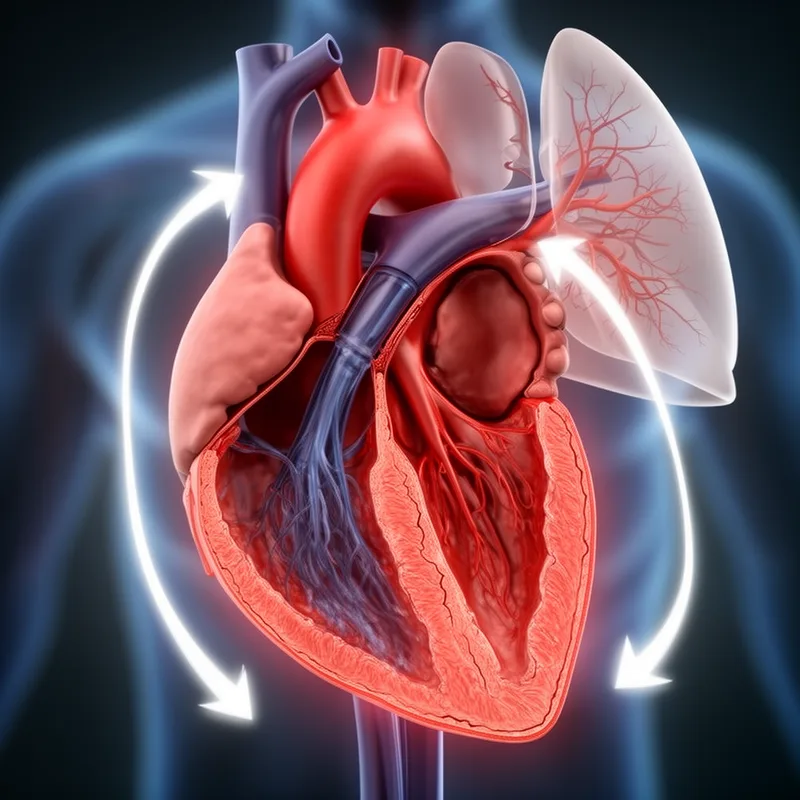
heart ventricle


 1
4.4
1
4.4
- noun
- /hɑrt ˈvɛntrɪkəl/
- Specialized
- The surgeon explained that the left heart ventricle is responsible for pumping oxygenated blood to the body.
Examples
-
An ultrasound was used to examine the function of the heart ventricle after the patient’s heart attack.
-
Damage to the right heart ventricle can affect blood flow to the lungs.
-
The left heart ventricle pumps oxygenated blood to the body.
-
Each heart ventricle plays a crucial role in circulation.
-
The left heart ventricle pumps oxygenated blood to the body through the aorta.
-
After the heart fills with blood, the heart ventricle contracts to push blood into the arteries.
-
Doctors monitor the size of the heart ventricle to assess the heart's pumping efficiency.
Synonyms
 13
6.1
13
6.1
A chamber in the heart that gets blood from an upper chamber and pumps it into an artery
How Big
- Specialized
3
3.3

- Specialized
1
4.4
Surface Forms
Morphology
The phrase is transparently compositional: 'ventricle' denotes a cardiac chamber and 'heart' specifies which organ, so 'heart ventricle' clearly means a chamber of the heart that receives blood and pumps it out. This part–whole noun + noun pattern is a regular, cross-linguistically common way to name anatomical parts and would be understandable to a B1 learner who knows both constituents.
Etymology
Heart ventricle is a name made from heart and ventricle, where ventricle used to mean a 'small belly' or 'little room'. So a heart ventricle is one of the heart's lower 'pumping rooms' that gets blood from above and pushes it out to the lungs or the body.