
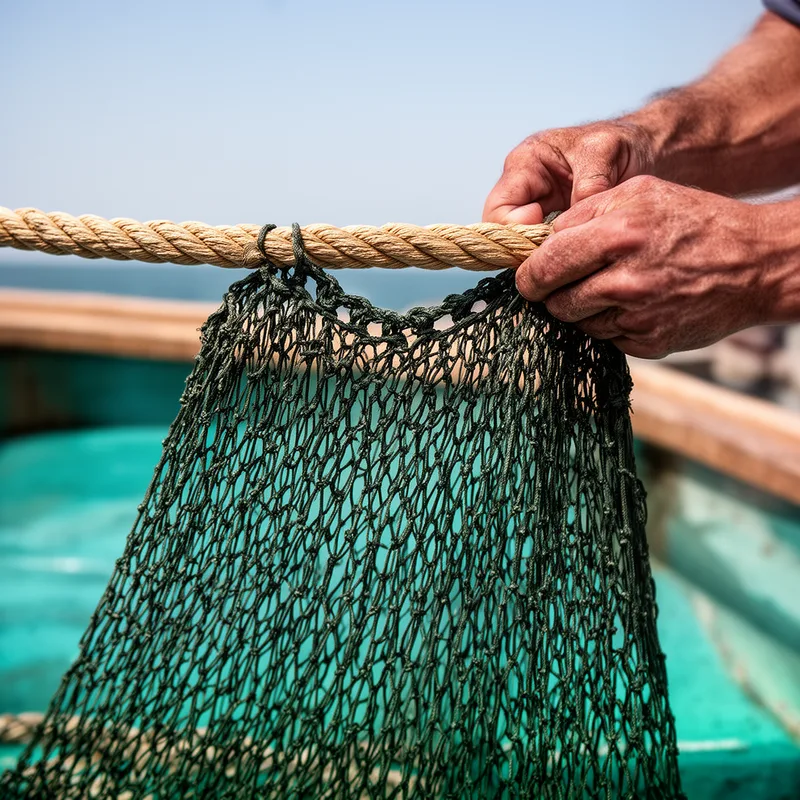
headrope
- noun
- /ˈhɛdˌroʊp/
- Specialized
- The skimmer was developed to catch white shrimp, Penaeus setiferus, observed jumping over the cork line (headrope) of trawls being worked in shallow waters.
Examples
-
The headrope, 23 m (75 feet) long, and the footrope, 34 m (110 feet) long, were constructed of rope-wrapped wire cable and 76 mm (3 inches) rubber discs.
Academic text (1990) -
The sampling gear is an "eastern" otter trawl with a 25.3 m headrope and 34.1 m footrope.
Academic text (1992) -
A SCANMAR acoustic sensor was used to measure net height; that is, the distance from the center of the headrope to the bottom.
Academic text (1998) -
Most observed vessels utilized a transducer, or net sounder, placed on either the headrope or footrope to determine the depth and opening of the net.
Academic text (1994) -
There are approximately 40 musicians dressed in white jackets, checkered red and white headcloths, black headrope, black pants with red satin stripes, and white shoes.
Academic text (2000) -
While fishermen believe that net depth recorded by the transducer is important to fishing success and marine mammal avoidance (Venturo, 1993), only limited headrope, or gear, depth data were collected in 1992.
Academic text (1994) -
Also attached to the headrope were a Branker XL-200 data logger for measuring depth and temperature and a Furuno acoustic link netsounder for observing net height and the approximate position of the ground gear relative to the bottom.
Academic text (1998) -
The headrope of the fishing net provides essential support during trawling.
-
Fishermen checked the headrope to ensure it was properly secured before deploying the net.
-
Adjustments were made to the headrope to maintain the net's shape in the water.
Surface Forms
Morphology
Etymology
The word headrope comes from two plain words: head, meaning 'top', and rope, meaning a cord. So a headrope is the rope that runs along the top edge of a net or sail to give it support and shape.

