
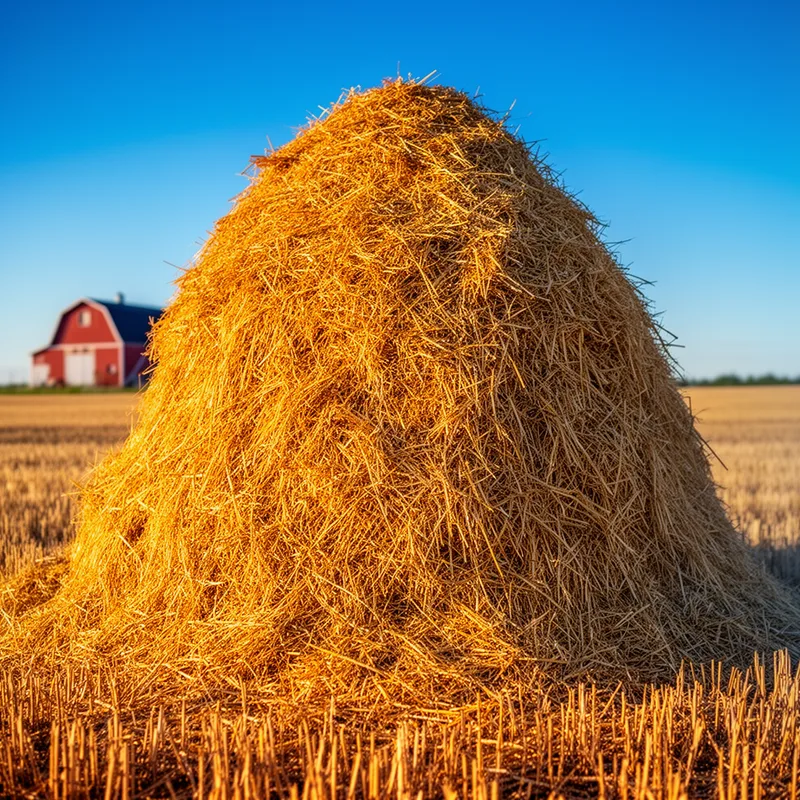
haystack
 43
1.6
43
1.6

- noun
- /ˈheɪˌstæk/
- The men slept outside, disposed in various haystacks, wagon beds, and patches of bracken.
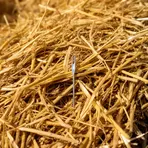
- needle in a haystack
Loading YouTube…
Watch on YouTubeSo that meant that the the haystack was getting bigger.
- So that meant that the the haystack was getting bigger.
- We call this the needle pile, the needle in the haystack that everyone's looking for.
- So this is a phenomenon that is sometimes called finding hay in a haystack.
- And you know, if you, if you make enough calls, you'll find that needle in the haystack.
- OK, If you needling, if you fucking rode haystack on your arm and you fucking needling yourself, I'm out daddy.
- I have a buyer for that house and all of a sudden you see the needle in the haystack.
- And they said, Watson, help me understand, you know, what is, what are the types of things that'll help me identify the new needles in the haystack?
- Finding these home run stocks is difficult and many investors rather than trying to find a needle in a haystack, just buy the whole haystack.
- I mean, when you're in mouth, like, you know, like a needle in a haystack.
Examples
-
The dog ran away toward the haystack, scared by the beams of the flashlights scraping its body.
Fiction book (1994) -
Tom, I want you to go down by the haystack.
-
So that meant that the the haystack was getting bigger.
-
It's in a good tight shed, and it has a canvas haystack cover over it.
Fiction book (1994) -
That's rather a large haystack to hunt through for what must be a very small needle.
Fiction book (1996) -
They can hide in haystacks for a few hours.
-
At the MIT Haystack Observatory, students are given a new way to look at the universe.
Academic text (2004) -
The children played hide and seek around the large haystack in the farmer's field.
-
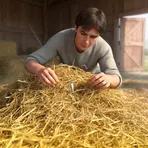
After the harvest, the farmer stacked the remaining hay into a haystack for the winter.
-
The old barn was filled with a haystack that provided a place for animals to stay warm.
Synonyms
Idioms
- Informal
To try to find something that is hidden among many things
How Big

Surface Forms
Morphology
Etymology
Haystack joins the simple words hay ('dried grass') and stack ('pile'). It literally means a pile of hay on a farm, and that clear picture is exactly why the word still means the same thing today.