

to have words
 11
6.9
11
6.9

- phrasal verb
- /hæv wɜrdz/
- Informal
- After the meeting, I need to have words with you about your presentation.
- going to have words
- just had words
Loading YouTube…
Watch on YouTubeSo the medical doctor and the African orderly had words that changed my life.
- So the medical doctor and the African orderly had words that changed my life.
Examples
-
I'll have words with any man who says otherwise.
-
I've already had words with at least one builder over improper removal and disposal of asbestos.
Blog text (11) -
- Oh, young lady, I must have words with you.
-
We had words tonight at the shop.
-
So we have words about that.
Fiction book (1994) -
Do you have words regarding this line of thinking?
Blog text (30) -
I've got to have words with her about it.
-
And I know you and me, we done had words in the past and some of them weren't too friendly.
-
If that's you again, Odd, we are going to have words!
-
Apparently one of you had words with the victim, in the motel office -when you were checkin' in?
Synonyms
 607
1.1
607
1.1
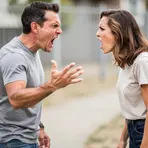
To speak angrily with someone because you disagree
 119
7.5
119
7.5
Argue angrily with someone about something
 46
3.1
46
3.1
To disagree strongly with another person or group
 36
2.9
36
2.9
To talk with someone because you disagree about something
 13
6.3
13
6.3
To argue strongly with each other
 6
6.8
6
6.8
To argue loudly for a long time
 5
5.1
5
5.1
To argue strongly with someone about something
 5
7.1
5
7.1
To argue in a friendly, quick way without serious anger
 5
6.8
5
6.8
Argue strongly with someone, often in public
 2
2.8
2
2.8
Argue with someone and feel angry or upset afterward


 1
7.2
1
7.2
To tell someone you are unhappy with them in an angry way

To argue angrily, often for a long time or in public

Tell someone angrily that you are unhappy with them

To argue strongly in public, often in writing or speech
Antonyms


How Angry
35
2.6

- Informal
11
6.9
607
1.1
- Formal
∞
2.0
∞
1.6
Surface Forms
Morphology
The parts 'have' + 'words' give a basic cue that the expression involves speaking (having words), so a learner could guess it relates to a verbal exchange; however the specific sense 'argue/angrily discuss' is idiomatic and not fully predictable from the literal meanings. The confrontational nuance is therefore only partially transparent and would often require prior exposure or context for a B1 learner to infer reliably.
Etymology
The phrase have words may come from the image of two people having or exchanging words in a short, angry talk. When those words are angry, the talk becomes an argument, so the phrase now means 'to argue'.