
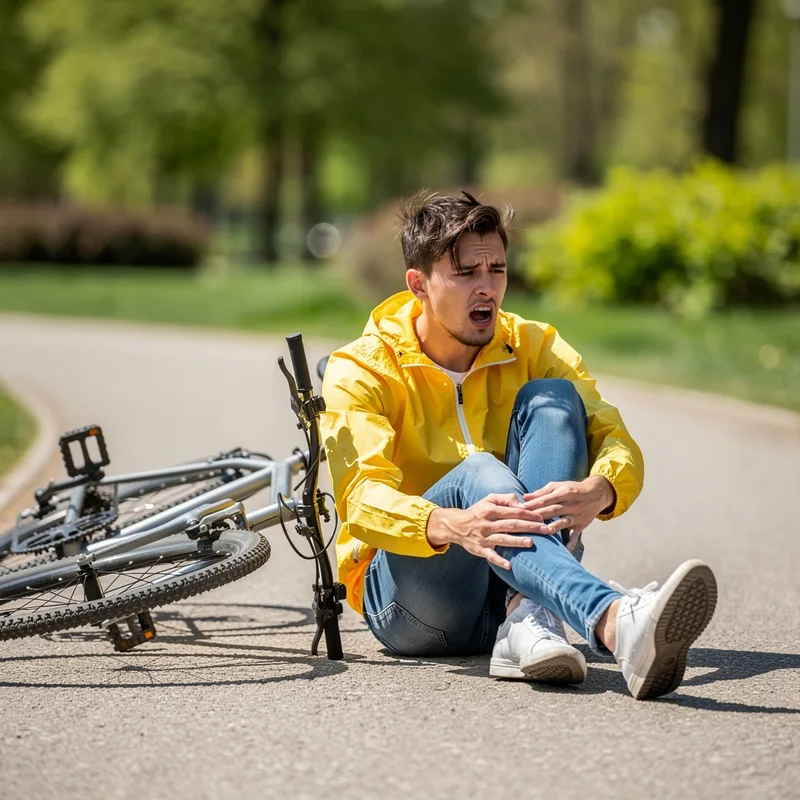
to have an accident
 58
1.1
58
1.1

- phrasal verb
- Be careful when driving; it's easy to have an accident if you're distracted.
- never had an accident
- just had an accident
- had an accident on the job
Loading YouTube…
Watch on YouTubeNo, because last autumn in October we had an accident here.
- No, because last autumn in October we had an accident here.
- She says, I had an accident and I was scarred and takes like a third of her cheek away.
- And he falls at the crossroad, He has an accident, falls at the crossroads, and he has to decide which way to go.
- And it's sad that you have to have an accident like that to be able to perceive it.
Examples
-
I had an accident that should've killed me.
-
Takes two bad drivers to have an accident, okay?
-
Yeah, I had an accident at work.
-
Did you have an accident?
-
- I had an accident this morning.
-
You see, my daughter had an accident with her horse...
Fiction book (1998) -
Believe it or not, James has never had an accident.
Fiction book (2000) -
Our son had an accident and, uh... Laura flew to London to see him at 4:00 this morning.
-
Last Wednesday, two businessmen with car phones had an accident on the ramp coming in from Cambridge Street.
Fiction book (1995) -
Yesterday, I had an accident while biking and fell off my handlebars.
Antonyms


How Serious
58
1.1
 640
1.0
640
1.0
Surface Forms
Morphology
The meaning 'to experience an unexpected harmful event' is directly and compositionally derived from 'have' (to experience/suffer) + 'an accident' (an unforeseen harmful occurrence), so a B1 learner who knows the constituents can infer it. This is a common, cross-linguistic possession/experience construction (e.g. Spanish 'tener un accidente'), reinforcing full transparency.
Etymology
Have an accident paints a simple picture: something sudden and unplanned happens to you, like slipping and breaking a bone or a car crash. That's why it means 'to experience an unexpected event that causes harm, injury, or damage'.