
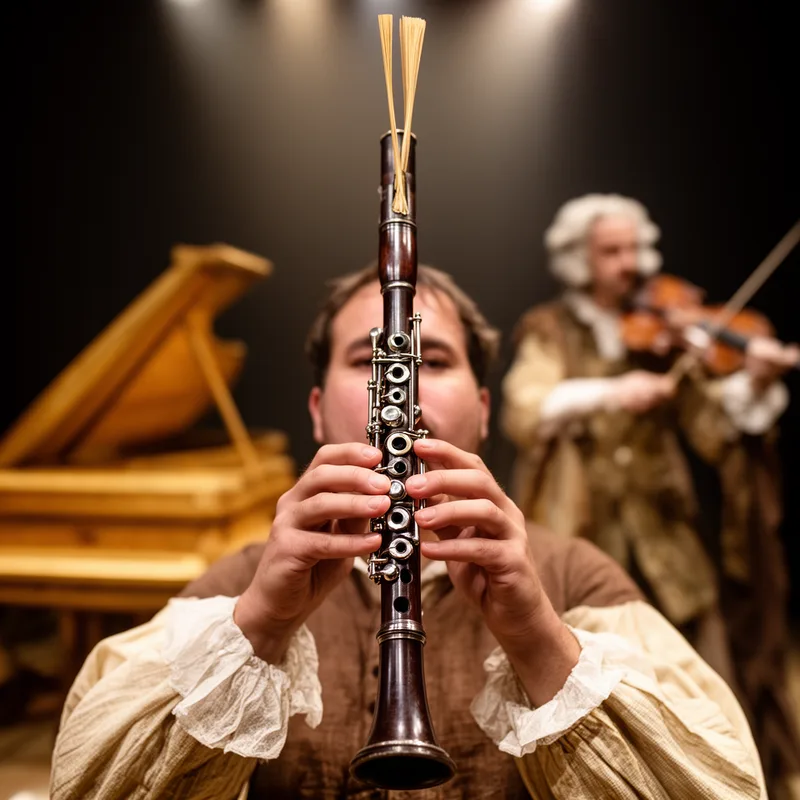
hautbois
- noun
- /oʊˈbɔɪ/
- Archaic
- The hautbois, with its distinctive sound, was a popular instrument in Baroque orchestras.
Examples
-
The hautbois was known in the American colonies at least by 1714 when a "Band of Musick" of several hautbois and signaling trumpets performed on October 11 in New York in a parade observing the death of Queen Anne and celebrating the coronation of King George I, the first Hanoverian on the British throne.
Academic text (2015) -
By the late eighteenth century, the hautbois had been joined by pairs of clarinets, horns, and bassoons—a combination used in court and for military purposes that became known as Harmoniemusik.
Academic text (2015) -
The hautbois was known in the American colonies at least by 1714 when a "Band of Musick" of several hautbois and signaling trumpets performed on October 11 in New York in a parade observing the death of Queen Anne and celebrating the coronation of King George I, the first Hanoverian on the British throne.
Academic text (2015) -
During the concert, the hautbois soloist captivated the audience with her beautiful melody.
-
Many composers wrote pieces specifically for the hautbois in the 17th century.
Synonyms



Surface Forms
Etymology
Hautbois comes from the French parts haut ('high') and bois ('wood'), so it literally means 'high wood' and names a wooden wind instrument that plays high notes. That's why the hautbois is an early form of the modern oboe.