
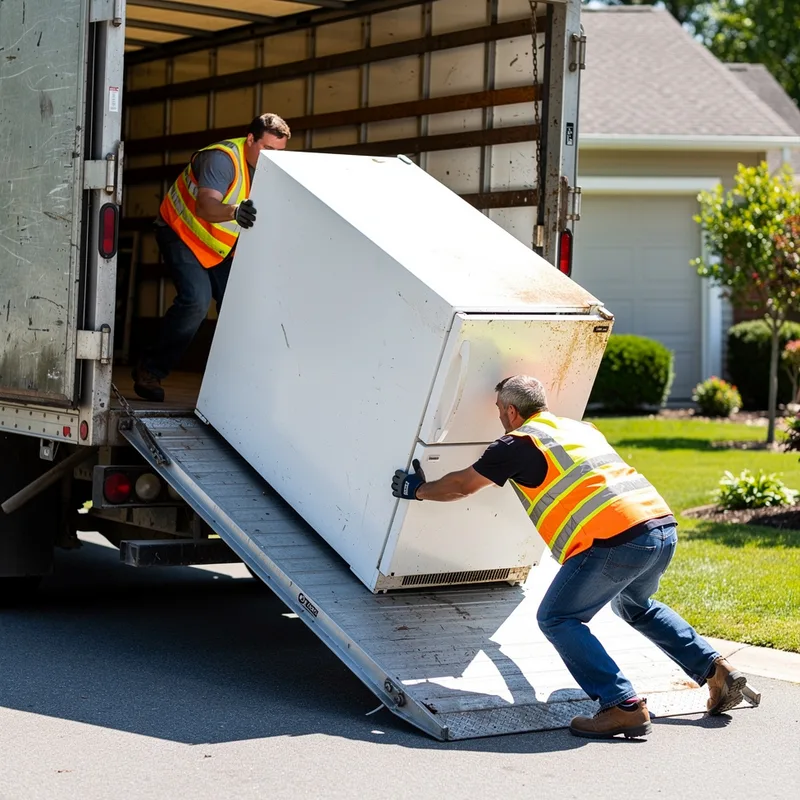
to haul away
 8
3.4
8
3.4

- phrasal verb
- /hɔl əˈweɪ/
- Some came prepared, using trucks and other vehicles to haul away items too heavy to carry.
Examples
-
One concessionaire stated that 100 truckloads of large particles were hauled away from the beach.
Academic text (2008) -
Furniture, clothing, dishes, books, all of it had been hauled away by looters.
Fiction book (1994) -
Beer was simply being hauled away to storage buildings.
Fiction book (2001) -
I sent a tow over to haul away what's left of it.
-
Fill your wagon with supplies and leave with whatever it is you haul away from the fort.
-
The paper is hauled away in a packer truck twice a week.
Academic text (1995) -
Most of the house was hauled away to be buried in a landfill.
-
All the mine buildings are gone, hauled away by the company (Seasons 291).
Academic text (2014) -
In England, the dustman empties your dustbin and hauls away your trash.
Fiction book (1991) -
At dawn, garbage collectors would haul away the refuse set before each house.
Synonyms
 722
2.7
722
2.7
To take someone or something from a vehicle and leave them at a place
 157
2.1
157
2.1
To carry something in a vehicle or over a long distance
 88
3.5
88
3.5
To move people or things away, sometimes because of strong feeling
 28
2.6
28
2.6
To move goods by road in a large vehicle
 5
4.1
5
4.1
To take something away using a truck or van
 4
5.9
4
5.9
To take someone or something away by vehicle, often quickly and without care
 1
4.1
1
4.1
To take something away in a vehicle, often because it is large or unwanted


 1
3.8
1
3.8
To pull something behind a vehicle for transport
 1
3.7
1
3.7
To move something by making it roll on its round parts
Antonyms

How Much
91
3.1
 8
3.4
8
3.4
- US
31
1.3
202
1.8
348
1.0
Surface Forms
Morphology
The meaning 'to take away or remove something' is directly and compositionally derived from 'haul' (to move or convey goods) combined with 'away' (to another location). This verb+particle pattern is a straightforward, cross-linguistically common composition, so a B1 learner who knows both constituents would readily infer the MWE meaning.
Etymology
Haul away comes from the picture of workers using a truck to haul a heavy thing and move it away to another place. That's why it means 'to take away or remove large or heavy items'.