

to have words with


 1
7.2
1
7.2
- phrasal verb
- Informal
- "I was furious with Jackie when she told me she'd had words with you." "I thought you would be angry with me," Morgan admitted quietly.
Loading YouTube…
Watch on YouTubeAnd then he was having words with his brother.
- And then he was having words with his brother.
- And yeah, he had words with with Paul Ince.
Examples
-
After the meeting, he had words with his manager regarding the new policy.
-
And then he was having words with his brother.
-
And yeah, he had words with with Paul Ince.
-
"You had words with your father?" Addy asked as soon as the bedroom door was closed.
Fiction book (1996) -
She was upset after having words with her colleague about the project.
-
I need to have words with you about your recent behavior in class.
Synonyms
 119
7.5
119
7.5
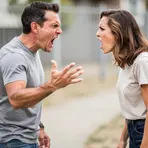
Argue angrily with someone about something
 11
6.9
11
6.9
Talk angrily to someone because of a disagreement
 2
2.8
2
2.8
Argue with someone and feel angry or upset afterward
Antonyms

How Confrontational
36
7.2

- Formal
33
6.1
- Informal
1
7.2
∞
1.7
- Informal
Surface Forms
Morphology
The constituents 'have' + 'words' + 'with' clearly signal an act of speaking directed at someone, so a learner can infer it involves talking to a person. However, the specific nuance — that the talk is confrontational or expresses disapproval — is a conventionalized, idiomatic use of 'have words' that is not fully predictable from the parts, though cross‑linguistic parallels make the figurative sense somewhat recoverable.
Etymology
Have words with comes from the simple image of two people exchanging sharp words, short angry sentences used in a quarrel, face to face. So to have words with someone means 'to speak to them to show disapproval or to argue'.