
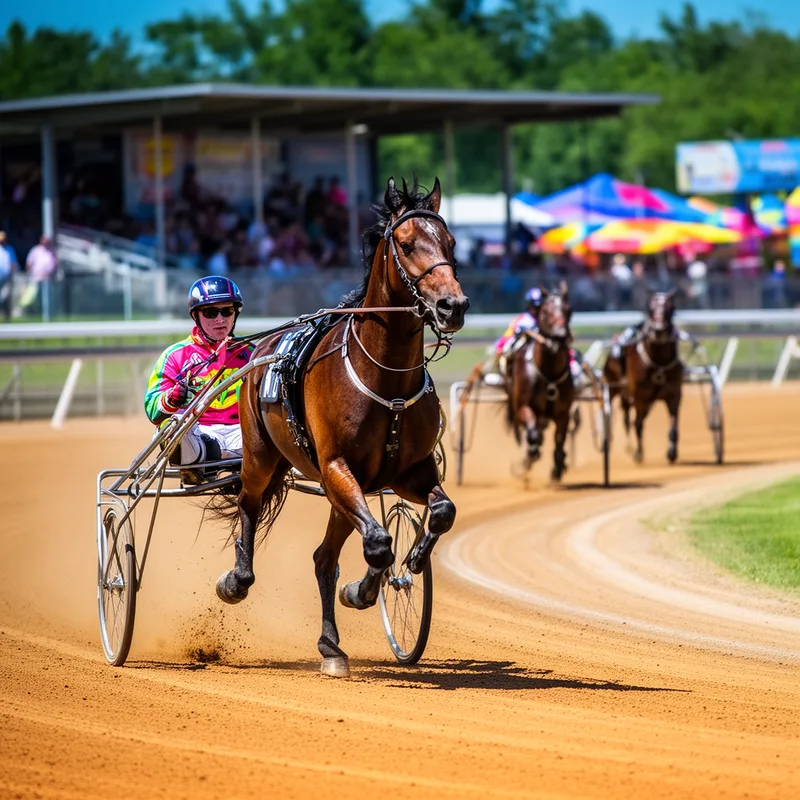
harness racing


 1
4.4
1
4.4
- noun
- /ˈhɑrnɪs ˈreɪsɪŋ/
- Jargon
- Harsell succeeded Busbey as editor of the magazine, which was founded by Busbey and is most famous for its reporting on harness racing and horse breeding.
- harness racing horses
- harness racing track
- harness racing driver
Examples
-
Harness racing or, like, the normal kind?
-
In 1989, a historical marker posted outside the Rock Barn emphasized Coggins as a breeder of harness racing horses.
Academic text (2013) -
Real at the time, the pacer who is seldom hopped and is largely trained on the lead will face her toughest harness racing test in the last race at Alexandra Park tomorrow night (Friday, November 16).
Blog text (22) -
The spectators cheered as the horses competed in the exciting harness racing event at the local track.
-
Many families enjoy visiting the racetrack to watch harness racing, where horses trot alongside colorful carts.
-
The city plans to promote harness racing as a way to boost tourism and engage the community.
Synonyms
 12
2.0
12
2.0
A sport where horses race, usually with riders and people betting
Surface Forms
Morphology
The compound is directly compositional: 'harness' (straps/gear used on animals) combined with 'racing' (a speed competition) yields a clear sense of a race involving harnessed animals. A B1 learner who knows both words can infer it refers to a form of horse racing using harnesses, even if they may not know technical details like sulkies or trotting versus galloping.
Etymology
Harness racing comes from the image of a horse wearing a harness and pulling a small two-wheeled cart with the driver sitting behind while the horse trots or paces. So, 'harness racing' means a race where horses pull carts with drivers instead of being ridden on their backs.