

hara-kiri


 1
9.9
1
9.9
- noun
- /ˌhɑːrəˈkɪri/
- NSFW
- At times, hara-kiri was as necessary to the Japanese as extreme unction is to a devout Catholic.
- commit hara-kiri
Examples
-
Under such circumstances, the warrior actually seeks death, and to all Japanese, hara-kiri is a natural, proper, logical release.
Academic text (2010) -
Key men are likely to commit hara-kiri.
Academic text (2010) -
Maybe he can teach you hara-kiri.
-
I'm so upset I could commit hara-kiri.
-
Then an overpowering inner force compels him to resort to hara-kiri.
Academic text (2010) -
The Samurai established hara-kiri as a means of preserving honor and expressing supreme and final moral protest against adversity that they could not avoid.
Academic text (2010) -
Most of the Tokyo gangster militarists realized this, but an irrepressible inner force compelled them to strike. '112 Moral Protest' was how he also described hara-kiri, so the parallel was deliberate.
Academic text (2010) -
In feudal Japan, a samurai would choose to commit hara-kiri as an honorable way to die after a great defeat.
-
To restore his family's honor, he decided that hara-kiri was the only proper course of action.
-
The concept of hara-kiri is deeply rooted in Japanese culture, representing a final act of loyalty to one's principles.
Synonyms
 3
9.9
3
9.9
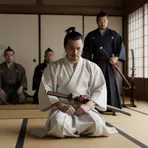
A ceremony where samurai kill themselves by cutting their stomachs with a sword in Japan
 1
9.9
1
9.9
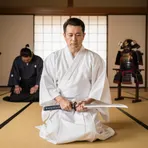
A ritual suicide where samurai in Japan cut their stomachs with a sword
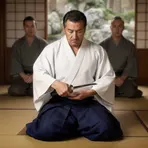
A traditional samurai suicide by cutting the stomach with a sword in old Japan
Surface Forms
Etymology
Hara-kiri comes from Japanese parts hara meaning 'belly' and kiri meaning 'cutting'. It literally means 'belly cutting', which is why it names the ritual suicide traditionally practiced by samurai to protect or restore honor.