
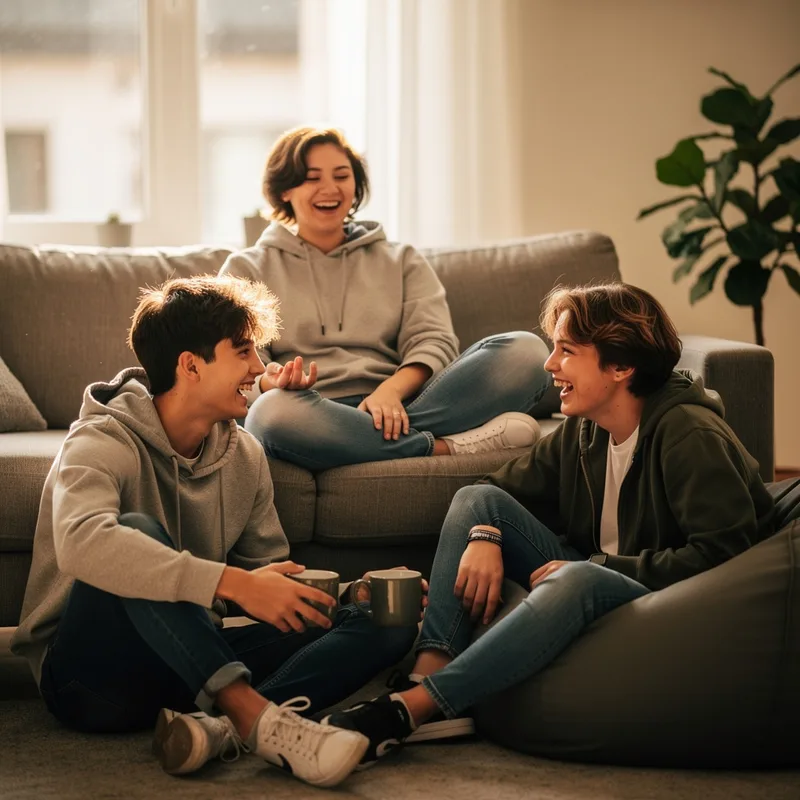
to hang out
 946
2.4
946
2.4

- phrasal verb
- /hæŋ aʊt/
- Informal
- The cafeteria is also the number one place to hang out with your friends.
- hang out with friends
- just hang out
- hang out together
Loading YouTube…
Watch on YouTubeAnd but I've been hanging out with men, right?
- And but I've been hanging out with men, right?
- My sister and his brother hung out as friends.
- And, you know, it's funny to hang out with you now.
- I love just getting to hang out with a friend now.
- You said, should we hang out again soon?
- And I think anyone who is who's hung out with kids will agree.
- So you and I, we're going to hang out just a little bit.
- Why don't you go to this island, hang out, maybe save the world.
- He goes because cool people want to hang out with people doing cool things.
- And, you know, as you and I, you've hung out with comedians.
- We were walking around the house hanging out, having just a blast.
- Did you guys like hang out in your rooms?
- Quickly became friends, but we didn't hang out because she was mad.
Examples
-
After school, we often hang out at the coffee shop to relax.
-
I love just getting to hang out with a friend now.
-
And, you know, it's funny to hang out with you now.
-
You said, should we hang out again soon?
-
So we're going to hang out? Yeah.
-
But this year I want to hang out with my friends and family.
-
Or you can hang out and talk.
-
We supported each other and still hang out now that class is over.
Academic text (2008) -
My gosh, just hang out with us.
-
During the summer, when I forgot my key, I'd just hang out after school at JoAnn's.
Fiction book (1990)
Synonyms
 407
2.0
407
2.0
To stay in a place without doing anything important
 350
1.1
350
1.1
To spend time sitting and doing very little without a clear purpose
 111
4.1
111
4.1
To spend time doing playful or unplanned activities
 43
3.7
43
3.7
To spend time doing nothing useful
 14
9.1
14
9.1
To spend time relaxing with friends or alone without a plan
 7
4.3
7
4.3
To spend time relaxing and doing very little
 5
3.8
5
3.8
To relax and do very little
 3
4.4
3
4.4
To stay in a place without a clear reason
 1
3.4
1
3.4
To spend time lazily doing little or nothing
 1
4.4
1
4.4
To spend time doing very little and relaxing

To relax and spend time with friends or alone
To spend time playing or hanging out with friends

To relax and spend time doing nothing, like watching movies
Antonyms

How Social
- Informal
298
3.0

- Informal
946
2.4
- Informal
122
1.8
64
3.1
∞
1.0
Surface Forms
Morphology
The sense 'to spend time relaxing or socializing' connects to 'hang' (to linger or persist) and 'out' (away/outside), so a learner could plausibly infer a sense of lingering or being away from home. However, the extension to casual socializing (and the fact it often does not imply being outdoors) is metaphorical and not fully predictable from the parts, so it is only partially transparent to a B1 learner.
Etymology
The phrasal verb hang out may come from the simple image of clothes left on a line: hang means to leave something hanging and out means outside, so the items just stay there with no work to do. That's why when people say they hang out, they mean 'to spend time' or 'relax' together.