
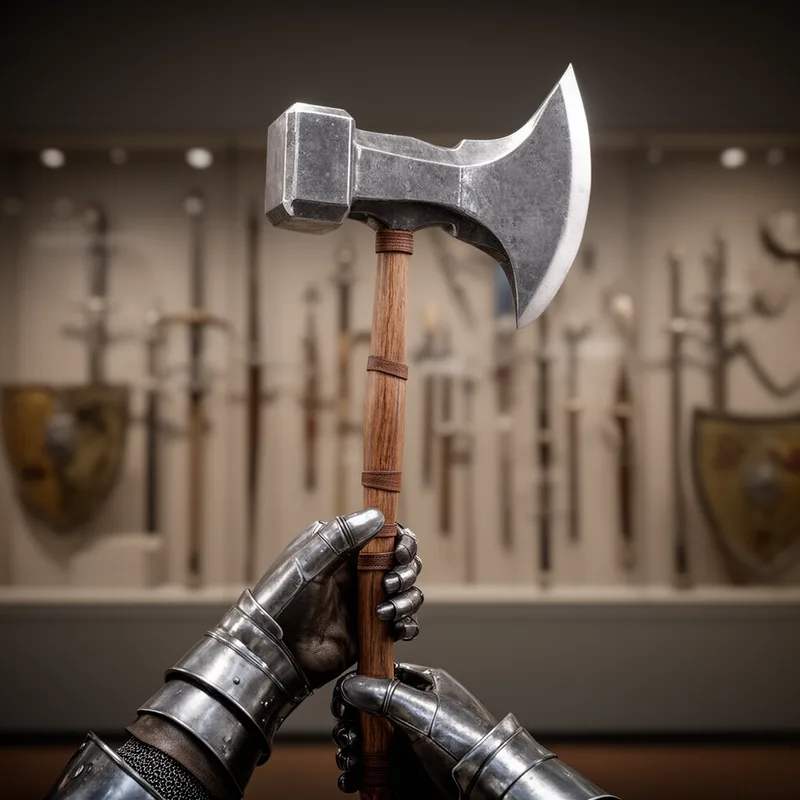
hammer-axe
- noun
- The knight carried a hammer-axe into battle for both striking and cleaving attacks.
Examples
-
With a powerful swing, he brought the hammer-axe down on his opponent's shield.
-
Museum displays often include a hammer-axe among other medieval weapons.
-
The knight wielded a hammer-axe during the battle.
-
Many hammer-axes were found in the ancient ruins.
-
The knight carried a hammer-axe into battle, effectively using it to strike and cleave his foes.
-
Museum exhibits showcase a hammer-axe, highlighting its dual function as both a weapon and a tool in medieval warfare.
-
With a powerful swing, he aimed his hammer-axe at the enemy, demonstrating its lethal combination of hammer and blade.
Synonyms
A weapon with a hammer head on one side and an axe blade on the other for fighting
A tool with an axe blade on one side and a hammer on the other for fighting or work
Surface Forms
Morphology
Etymology
The word hammer-axe is a simple English compound of hammer and axe, two common tools. Think of hammer as 'to hit' and axe as 'to cut', so a hammer-axe is a weapon that can both smash and chop in medieval battle.

