
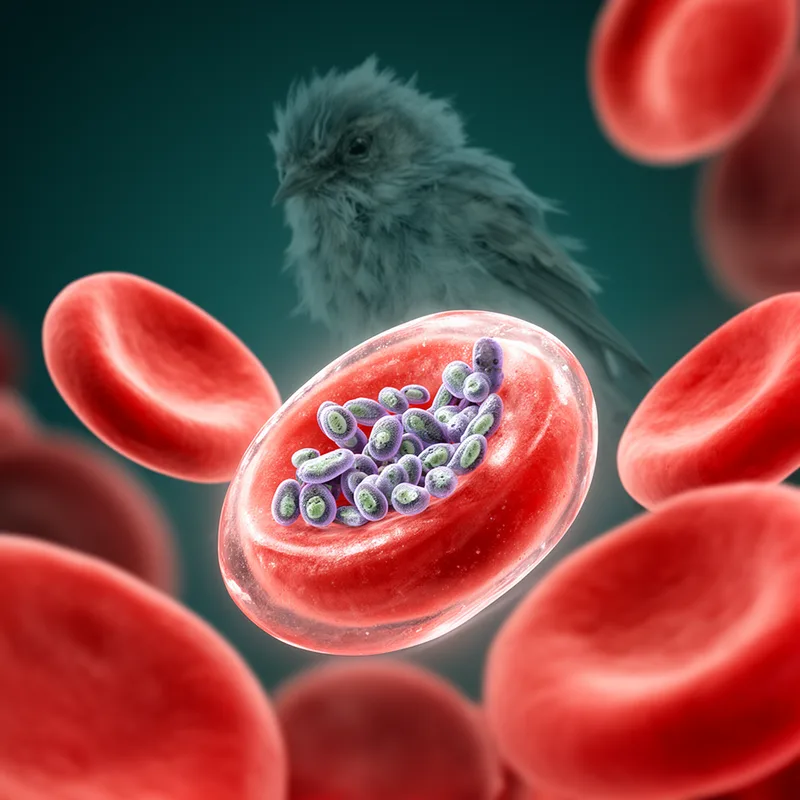
haemosporidian
- noun
- /ˌhiːməˈspɔːrɪdɪən/
- UK
- The haemosporidian infected the bird's red blood cells, causing severe illness.
Examples
-
Malaria parasites are classified as haemosporidians due to their complex life cycles involving blood.
-
Researchers studied several haemosporidian species to understand their role in avian disease transmission.
-
The haemosporidian parasite affects the blood cells of birds.
-
Many species of haemosporidians are known to cause diseases in vertebrates.
-
Malaria parasites are classified as haemosporidians because they infect the blood cells of vertebrates.
-
The haemosporidian parasite infected the bird's red blood cells and caused severe illness.
-
Researchers studied several haemosporidian species to investigate their impact on vertebrate health.
Surface Forms
Morphology
haemosporidian = sporidian (semi-transparent) = haemo + sporid + ian
For someone who knows 'sporidian', adding 'haemo-' straightforwardly signals a blood-related subtype.
Etymology
Haemosporidian comes from haemo- meaning 'blood' and sporo- which is the same root as the English word spore, meaning 'tiny seed'. So a haemosporidian is a tiny, spore-like parasite that lives in the blood.

