
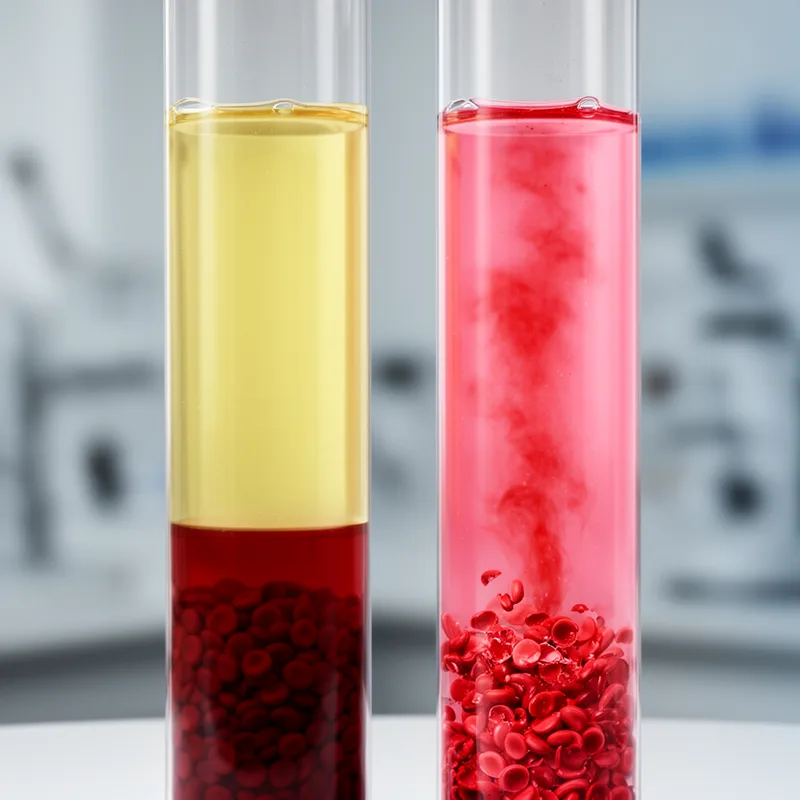
hemoglobinemia
- noun
- /ˌhɛməˌɡloʊbɪˈniːmiə/
- Specialized
- Severe hemoglobinemia can indicate extensive red blood cell breakdown.
Examples
-
The laboratory tests confirmed hemoglobinemia after the patient exhibited symptoms of acute hemolysis.
-
Patients with hemoglobinemia may experience fatigue.
-
Doctors monitor for hemoglobinemia in patients who have undergone major surgery.
-
The doctor diagnosed her with hemoglobinemia after the blood test.
-
The laboratory tests confirmed hemoglobinemia after the patient exhibited symptoms of acute hemolysis.
-
Doctors monitor for hemoglobinemia in patients who have undergone major surgery.
-
Patients with hemoglobinemia may experience fatigue.
Surface Forms
Morphology
hemoglobinemia = hemoglobin (transparent) = hemoglobin + emia
A regular medical formation: the noun 'hemoglobin' plus the medical suffix '-emia' yields a blood condition involving hemoglobin.
Etymology
Hemoglobinemia comes from three parts: hemo- meaning 'blood', globin from a word for 'a small ball' (as in globe) that names the round protein in red blood cells, and -emia meaning 'a blood condition'. So hemoglobinemia describes a blood condition with too much hemoglobin in the blood.

