
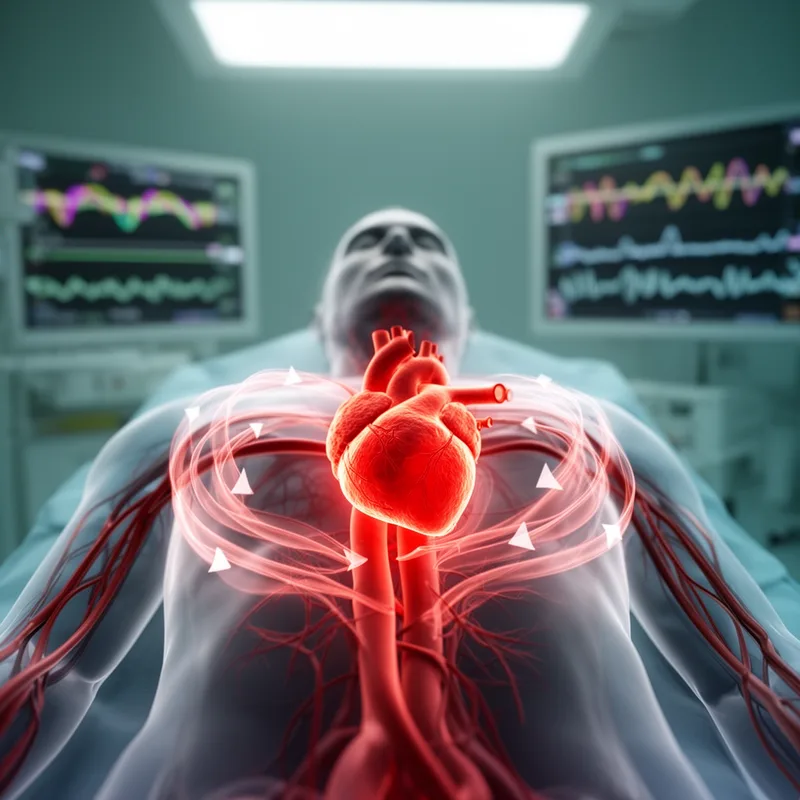
hemodynamic
 1
7.0

- adjective
- /ˌhiːmoʊdaɪˈnæmɪk/
- Specialized
- The patient was re-examined one month later and had normal hemodynamic status.
- hemodynamic responses
- hemodynamic parameters
- hemodynamic instability
Loading YouTube…
Watch on YouTubeYou've got these metabolic, sometimes hemodynamic, blood related signals.
- You've got these metabolic, sometimes hemodynamic, blood related signals.
Examples
-
Intraoperative and postoperative transfusions were governed by the clinical and hemodynamic status of the patient.
Academic text (1999) -
Common emergency situations that activate these pages include hemodynamic instability, impending respiratory failure, seizures, acute bleeding, and cardiac and pulmonary arrest.
Academic text (2007) -
Patients need to be managed in the intensive unit with continuous hemodynamic monitoring and support.
Academic text (2016) -
Once the diagnosis is made, therapy should be based on sound clinical judgment supported by hemodynamic parameters.
Academic text (2007) -
Interest in remote hemodynamic monitoring is increasing, but these devices have yet to increase survival in patients with HF.
Academic text (2014) -
Throughout the surgery, the hemodynamic parameters, pulse oximetry, and blood loss were assessed.
Academic text (2007) -
Based on his hemodynamic and oxygenation status, his oxygen consumption was calculated at approximately 62%.
Academic text (2005) -
His hemodynamic parameters normalized, and the PA catheter was pulled back into the CVP position.
Academic text (2005) -
Therefore, hemodynamic goals include maintaining adequate preload and afterload and preventing excessive increases in contractility and tachycardia.
Academic text (2007) -
Continuous hemodynamic monitoring is crucial for patients in critical condition.
Synonyms
 48
4.1
Relating to the heart and blood vessels
 12
4.1
Relating to the movement of blood and other fluids around the body


 1
7.9
About the movement of blood or other fluids in the body
Surface Forms
Morphology
Etymology
Hemodynamic comes from Greek parts haima meaning 'blood' and dynamis meaning 'power' or 'force', the same root as in dynamic. So hemodynamic describes the 'power' and flow of blood in the body, which is why we use it for blood circulation and heart function.