
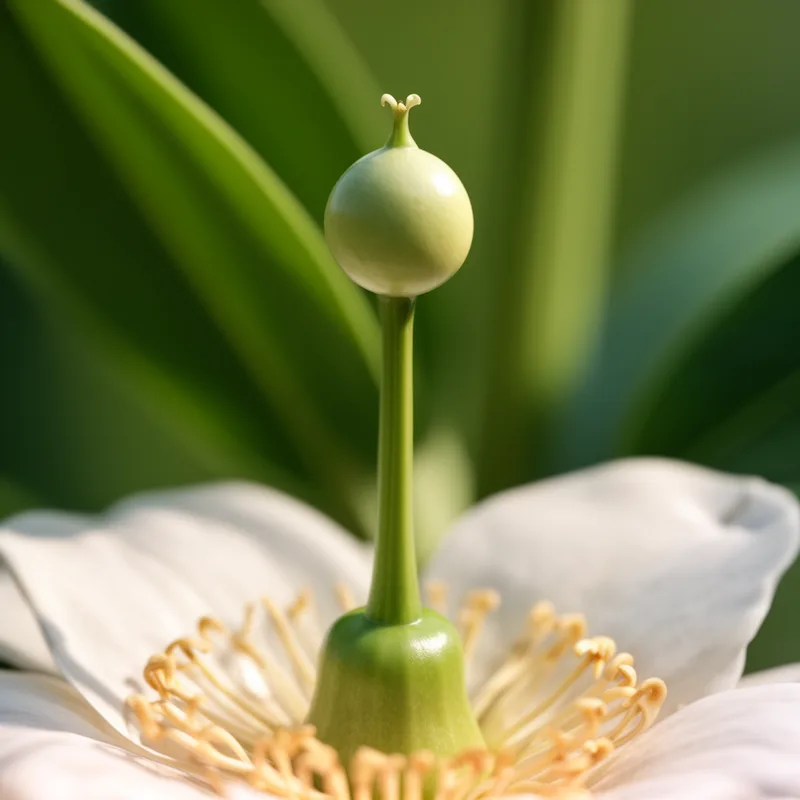
gynophore
- noun
- /ˈɡɪnəˌfɔr/
- Specialized
- The gynophore elevates the pistil in many flowering plants.
Examples
-
Certain species of Capparis have a long gynophore that separates the ovary from the base of the flower.
-
The scientist carefully measured the length of the gynophore in each sample.
-
Development of a gynophore is a distinguishing feature in some plant families.
-
In hibiscus, the gynophore is quite prominent.
-
Certain species of Capparis have a long gynophore that separates the ovary from the base of the flower.
-
Development of a gynophore is a distinguishing feature in some plant families.
-
The scientist carefully measured the length of the gynophore in each sample.
Surface Forms
Morphology
gynophore = gyno + phore
Composed of Greek scientific combining forms ('gyno-' and '-phore') that are not standalone English words and are unlikely to be understood by an average B1 learner from their parts.
Etymology
Gynophore comes from Greek parts gyno- meaning 'female', the same root as in gynecology, and -phore meaning 'bearer' or 'carrier'. So a gynophore is literally a 'female-bearer', a small stalk that carries the flower's female part, the pistil, up above the base of the flower.

