
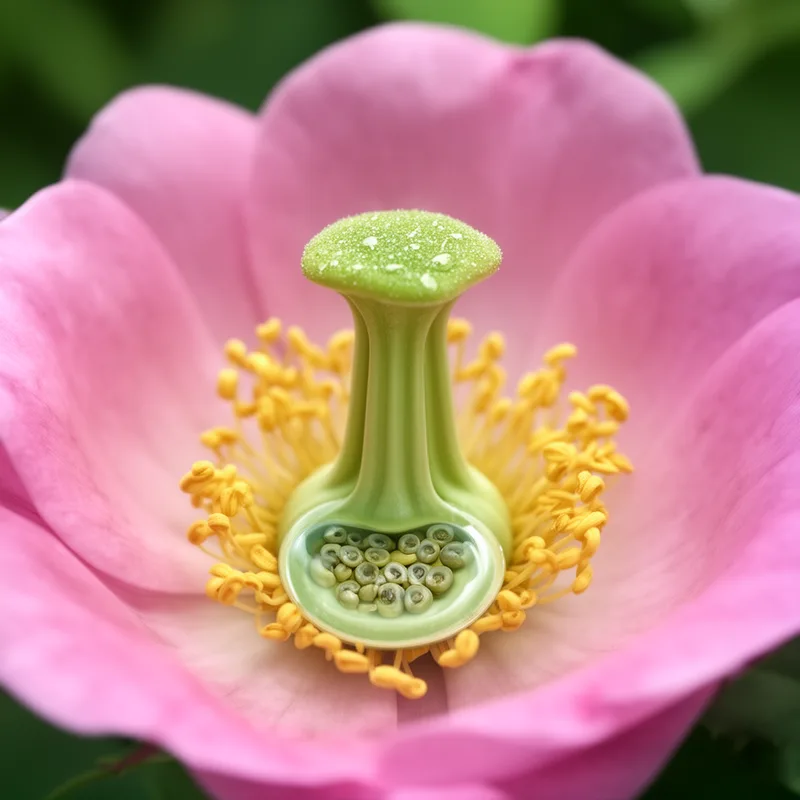
gynoecium


 1
9.9
- noun
- /ˌɡaɪnəˈsiːəm/
- Specialized
- In roses, the gynoecium forms the central part of the blossom that produces seeds.
Examples
-
The gynoecium is composed of several fused carpels in most flowering plants.
-
Scientists examined the development of the gynoecium under different light conditions.
-
The gynoecium is crucial.
-
What is a gynoecium?
-
In roses, the gynoecium forms the central part of the blossom that produces seeds.
-
Scientists examined the development of the gynoecium under different light conditions.
-
The gynoecium is composed of several fused carpels in most flowering plants.
Synonyms
 1
9.1
The female part of a flower that makes seeds
Surface Forms
Morphology
gynoecium = gyno + oecium
A learned scientific formation from Greek combining forms ('gyno-' + '-oecium') that is not readily analyzable by an average B1 learner, so the meaning cannot be reliably derived from the parts.
Etymology
Gynoecium comes from Greek parts gyno- meaning 'woman' and oikos meaning 'house', and the oikos part is the same root you see as 'eco' in eco-friendly. That's a useful picture: the gynoecium is the 'woman's house' of the flower where the female parts sit and seeds form.