
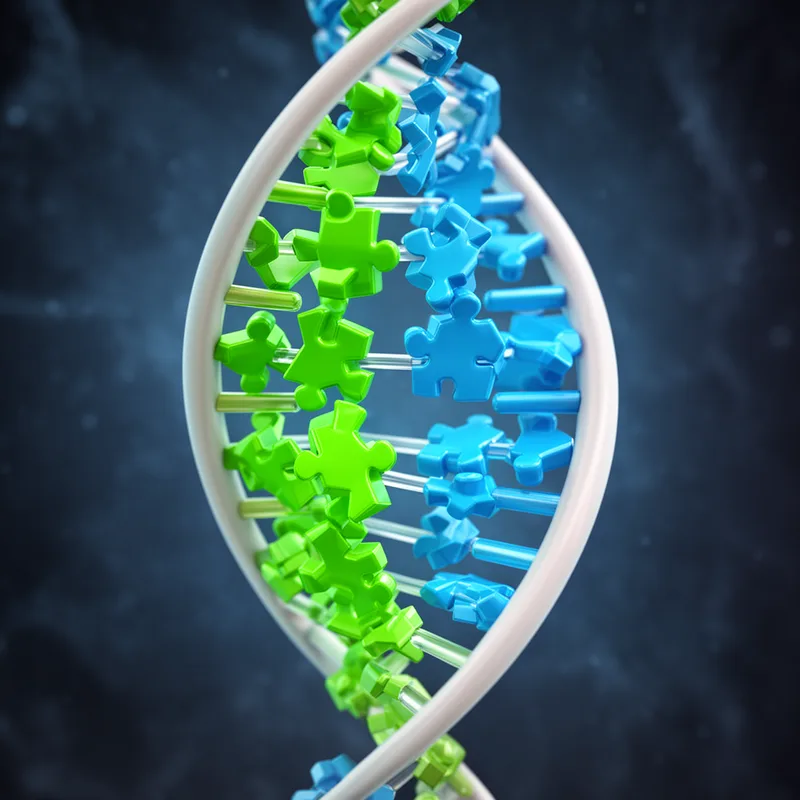
guanine
 3
7.1
3
7.1

- noun
- /ˈɡwɑːniːn/
- Specialized
 :
guanina
:
guanina
- In DNA, guanine pairs with cytosine to help form the double helix structure.
- guanine and cytosine
Examples
-
The nucleotide guanine is represented by the letter 'G' in the genetic code.
-
Both guanine and adenine are essential purines found in the genetic information of cells.
-
It's diagrammed on here that this is an A guanine pairing with a cytidine.
-
"Notice the sequence is made up of four basic compounds: adenine, thymine, guanine, and cytosine."
Fiction book (1990) -
DNA is made of four organic bases adenine, guanine, cytosine, and thymine, or AGC and T.
-
And there are four of these named after alphabets, adenine, guanine, cytosine, thymine, ATCG.
-
Genes are identified by the letters AGTC, representing the base chemical nucleotide pairings of Adenine, Guanine, Thymine, and Cytosine.
Academic text (2005) -
In addition to amino acids, the Murchison meteorite also contains adenine, guanine, and uracil, compounds in DNA and RNA that living creatures use to transfer and store their genetic information.
Academic text (2001)
Synonyms
 1
6.1
1
6.1
A part of DNA and RNA that pairs with cytosine
Surface Forms
Morphology
guanine = guano (opaque) = guan + ine
Although the name derives from 'guano' plus the chemical suffix '-ine', the modern scientific meaning 'a purine base in nucleic acids' is not inferable from 'guano' by an average learner.
Etymology
Guanine gets its name from guano, the word for 'bird droppings' where scientists first found the compound, and the ending -ine is a common chemical ending. So guanine is one of the four bases in DNA and RNA, and the name helps you remember it was first discovered in natural guano.