
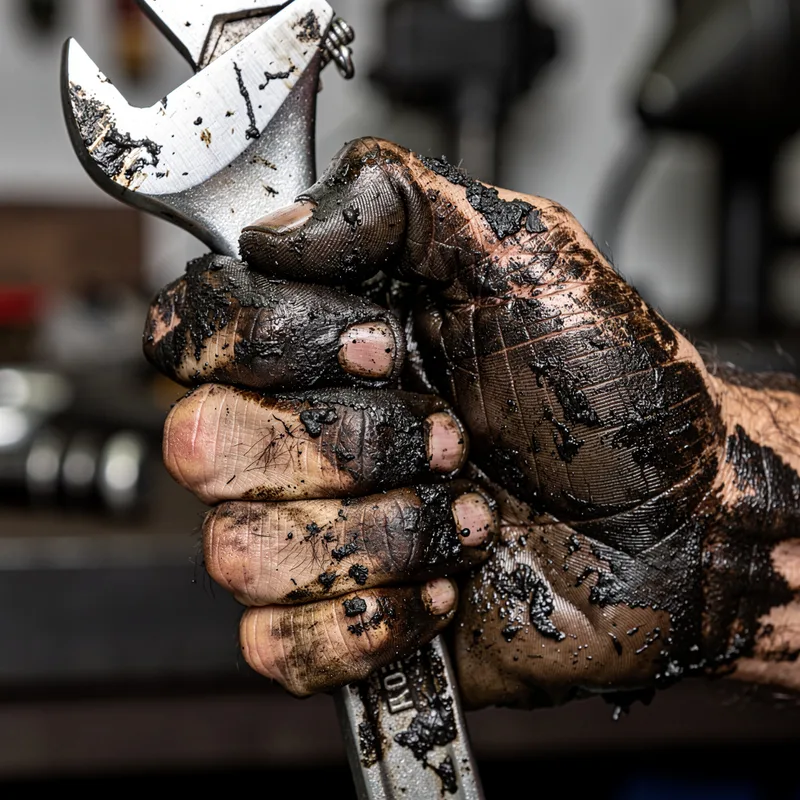
grimy
 21
3.7

- adjective
- /ˈɡraɪmi/
- These stories frequently portray Victorian life as grimy, corrupt and cruel.
Loading YouTube…
Watch on YouTubeYou know the one, the one with The Dirty beak and sooty feathers, the grimy swan.
- You know the one, the one with The Dirty beak and sooty feathers, the grimy swan.
- If you took the bus all the way into the city and went somewhere else, you'd be in a grimy, gritty slum.
- The work he did was not as grunt type, grungy work, grimy work.
- All the slimy, grimy, chubby fingered little boys want to just come into file and destroy the sanctity that I have.
- All right, So if you ever had a charging handle, that's real grimy.
- She loves the most grimiest hip hop you could ever think.
- He is your classic grimy, scumbag womanizing guy, allegedly.
Examples
-
Weasel looks out a grimy window at the faces of three small children peering in.
Fiction book (1992) -
Patti scrubs the sides of the grimy boards, her face turning red from the effort.
Fiction book (1994) -
Every day I wake up, it's still the present, the same grimy, boring present.
-
After his struggle through the forest, he suspected he was quite grimy enough for any ordinary purpose.
Fiction book (1992) -
The man was lean and dark and dressed in grimy velvet, too warm for the day.
Fiction book (1990) -
I felt grimy, my shirt sticking to my back, my face damp with sweat.
Academic text (2012) -
Gray light filtered through cracks in the ceiling, picking out the grimy contents of the shack.
Fiction book (1993) -
Saigon Ruby's Circle Bar is a cavernous hole tricked out in grimy red velvet and beaded curtains.
Fiction book (1990) -
The old couch sat in the corner, covered in grimy dust and stains.
-
After weeks of rain, the backyard was filled with grimy puddles of mud.
Synonyms
 146
1.0
Very dirty and covered with things that smell bad
 115
1.5
Very dirty and covered with mud or dirt
 104
1.0
Having a layer of dust that makes it look dirty
 40
1.0
Covered in oil or grease and feeling slippery
 27
6.1
Looking dirty and run down and often linked to crime
 19
4.6
Dark and dirty so it does not look bright
 18
1.4
Dirty and needing to be cleaned
 9
4.8
Dirty and covered with thick, stuck-on dirt
 5
6.0
Dirty and not good quality
 3
3.2
Dirty and covered in mud
 3
4.1
Having soft dirty marks that make a surface look blurred
 2
8.4
Looks dirty and unpleasant, often like a shabby room or shop
 2
5.6
Covered with a thin dirty film on the surface
 1
7.7
Covered with sticky, dirty stuff


 1
8.2
Covered thickly with dark dirt or soot
 1
8.8
Sticky and messy with a soft unpleasant covering
 1
5.6
Covered in black soot or dirt
 1
8.3
Covered with animal poop and smelling bad
Antonyms


How Dirty

Surface Forms
Morphology
Etymology
Grimy comes from the word grime, meaning 'dirt', plus the common ending -y, as in dusty, that means 'full of'. So grimy literally means 'full of dirt', which is why we use it for things that look very dirty.