
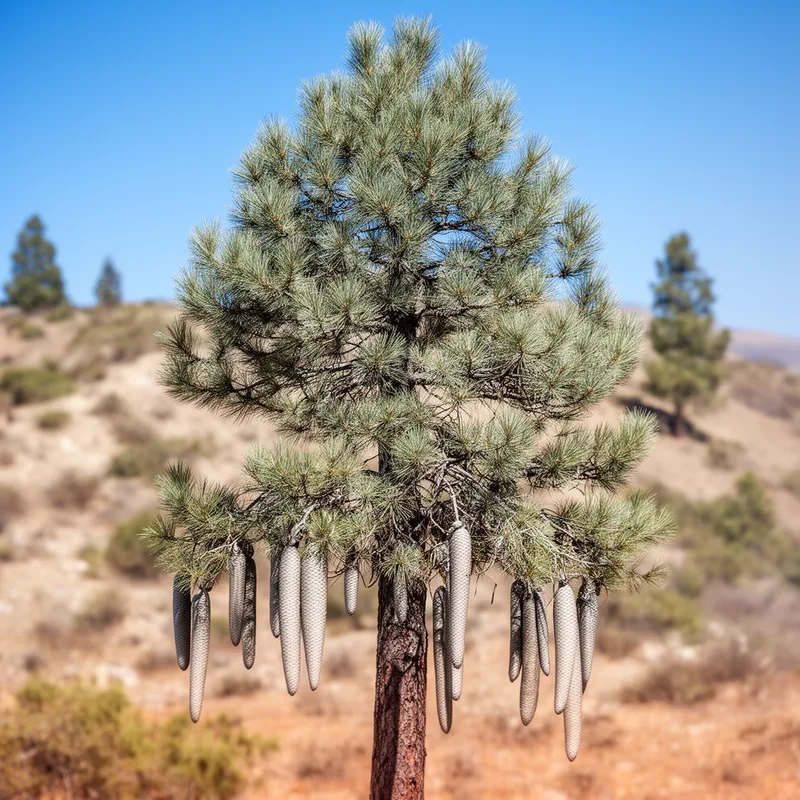
grey-leaf pine
- noun
- /ɡreɪ-liːf paɪn/
- Specialized
- The grey-leaf pine produces long cylindrical cones that are distinctive to its species.
Examples
-
The grey-leaf pine is well adapted to the dry climate of southern California.
-
You can find several grey-leaf pines growing along the remote hillsides of the region.
-
Botanists studied the cones of the rare grey-leaf pine for their unique shape.
-
The grey-leaf pine thrives in the dry climate of California.
-
Many grey-leaf pines can be found in the Sierra Nevada mountains.
-
In the hills of southern California, the grey-leaf pine provides important habitat for local wildlife.
-
Visit the national park to see the tall grey-leaf pines that thrive in its unique ecosystem.
Synonyms

A medium-sized pine tree from southern California with five needles in each group and long cones
A medium pine tree from coastal California with long cones and clusters of five needles

A rare pine tree from southern California with long needles and large cones

A medium-sized pine tree that grows in dry California hills with five needles in each group and long thin cones
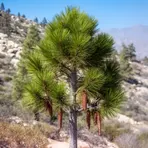
A medium-sized pine tree with five needles in each group and long thin cones native to southwestern California
Surface Forms
Morphology
grey-leaf + pine
The meaning ('a pine tree with grey leaves') follows directly from combining the color/leaf descriptor with 'pine' — a straightforward color + plant compound describing foliage. This compositional pattern is common in English and other languages, so a B1 learner who knows the constituent words will readily infer the intended referent.
Etymology
Grey-leaf pine comes from how the tree looks: its needles are pale and grey, and they act like small 'leaves', so people named that kind of pine for its grey 'leaf' appearance, which is why the name means this particular tree today.

