

green hellebore
- noun
- UK
- The green hellebore blooms early in the spring, often before many other flowers appear.
Examples
-
The gardener planted green hellebore to add color to the winter landscape.
-
Green hellebore is known for its toxic properties, so children and pets should be kept away.
-
The green hellebore blooms beautifully in spring.
-
Many gardeners love the green hellebore for its unique flowers.
-
Green hellebore is a beautiful plant that produces large, green flowers in early spring.
-
Many people grow green hellebore in their gardens for its striking foliage and unique blooms.
-
The green hellebore thrives in shaded areas, making it a popular choice for woodland gardens.
Synonyms
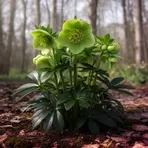
A flowering plant with green saucer-shaped flowers and split dark leaves that grows in Europe
Surface Forms
Morphology
The phrase is a straightforward adjective + noun composition: 'green' describes the color/appearance and 'hellebore' names a plant, so the meaning 'a hellebore that is green' is directly derivable from the parts. This is a common, cross-linguistically transparent modifier + noun pattern that a B1 learner who knows both words would readily understand.
Etymology
Green hellebore may come from old medicine, where the strong herb hellebore was used to treat serious sickness. Because the plant often did harm, people called it 'poisonous', and that dangerous image explains why the name now refers to a green plant known for being poisonous.

