
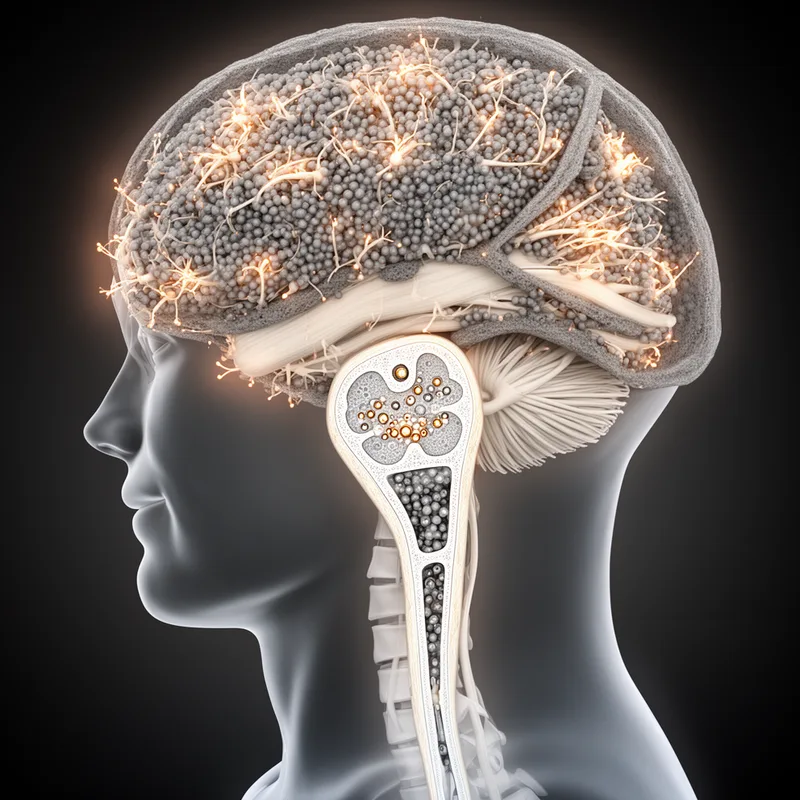
gray substance
- noun
- /ɡreɪ ˈsʌbstəns/
- Specialized
- In a healthy brain, gray substance is found primarily in the cerebral cortex and is responsible for various functions.
Examples
-
The cerebral cortex is primarily composed of gray substance that processes information.
-
Damage to the gray substance in the spinal cord can lead to loss of motor function.
-
Scientists studied the gray substance to better understand brain activity.
-
The gray substance in the brain is crucial for processing information.
-
What is the function of the gray substance in the nervous system?
-
The gray substance in the brain plays a vital role in processing information.
-
Damage to the gray substance can impair cognitive abilities and motor functions.
Synonyms

 7
4.1
7
4.1

The darker part of the brain and spinal cord containing nerve cells or used to mean being smart

A gray part of the brain and spinal cord that contains nerve cells
Surface Forms
Morphology
The phrase is compositionally built: 'gray' modifies 'substance' to mean a material that is gray, so a B1 learner who knows both words can infer the basic sense. Although the specific technical reference (nervous tissue) is specialised, the color+noun composition is transparent and cross-linguistically comparable (e.g. 'materia gris/matière grise'), so the item is predictable from its parts.
Etymology
Gray substance comes from doctors who saw that this part of the brain looked grey, not white, so the words gray and substance simply describe its color and material. Because it contains many nerve cells that help the brain process information, the phrase now means the 'brain tissue' that handles thinking and sensing.