
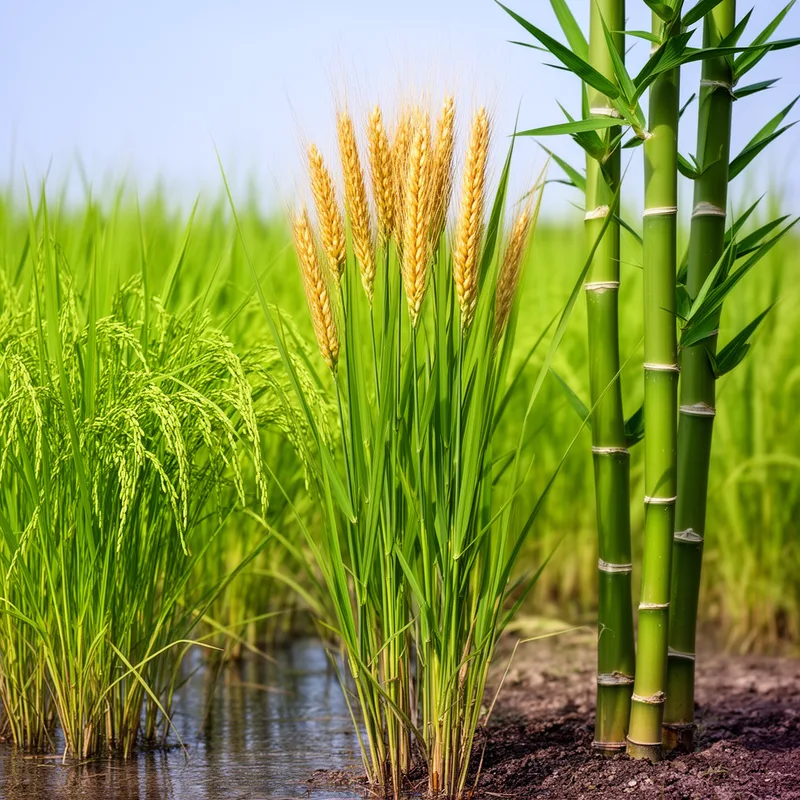
graminaceous plant
- noun
- /ˌɡræməˈneɪʃəs plænt/
- Specialized
- Botanists classify rice as a graminaceous plant due to its structural characteristics.
Examples
-
The wheat fields are filled with graminaceous plants in the late summer.
-
Bamboo is a type of graminaceous plant that grows rapidly in many climates.
-
A graminaceous plant is often found in meadows.
-
Many graminaceous plants thrive in wet environments.
-
Bamboo is a type of graminaceous plant that grows rapidly in many climates.
-
Botanists classify rice as a graminaceous plant due to its structural characteristics.
-
The wheat fields are filled with graminaceous plants in the late summer.
Synonyms
A plant like grass with long narrow leaves and jointed hollow stems
Surface Forms
Morphology
graminaceous + plant
The noun phrase is compositionally transparent: the adjective 'graminaceous' (meaning 'of or relating to grasses') directly modifies 'plant', so 'graminaceous plant' literally means a plant belonging to the grass family and is predictable from its parts. That said, 'graminaceous' is a technical, low-frequency adjective that a typical B1 learner probably won’t know without exposure, but given knowledge of the constituent words the meaning is transparent.
Etymology
Graminaceous plant comes from an old Latin word meaning 'grass', so it links graminaceous (about grass) with plant. That's why it means a plant in the 'grass' family, like wheat, rice, or bamboo.

