
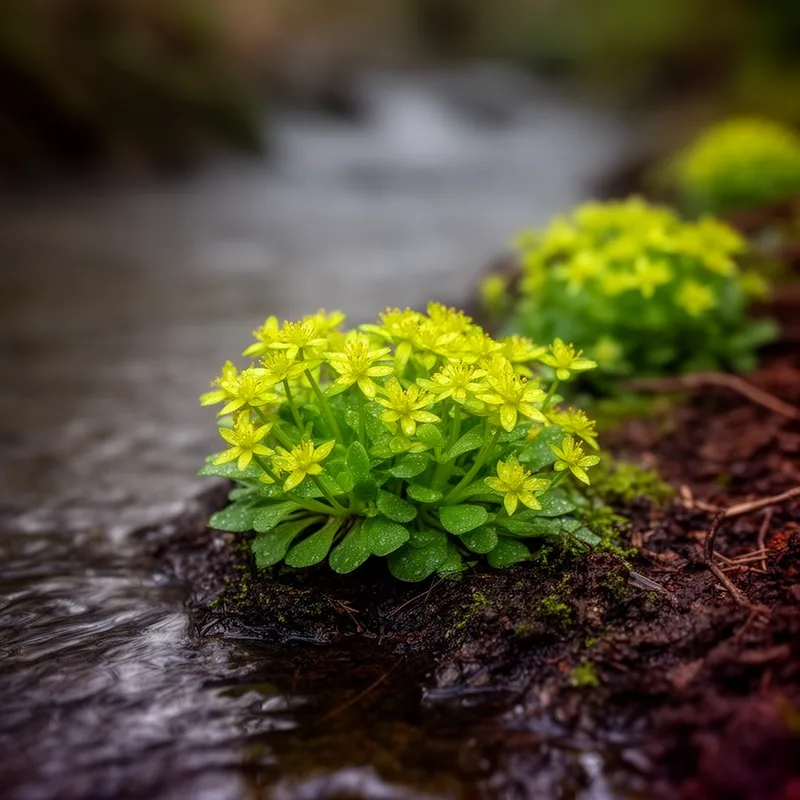
golden saxifrage
- noun
- Specialized
- The damp woodland was carpeted with golden saxifrage after the spring rains.
Examples
-
She identified the delicate plant as golden saxifrage growing near the stream.
-
Gardeners sometimes cultivate golden saxifrage in shady, moist borders for its foliage.
-
The golden saxifrage blooms beautifully in spring.
-
I saw a golden saxifrage near the pond.
-
In the garden, the golden saxifrage thrives under the shade of large trees.
-
Along the banks of the river, clusters of golden saxifrage can be seen blossoming.
-
The golden saxifrage adds a lovely touch with its yellowish-green flowers by the water's edge.
Synonyms

A small low plant that grows in wet places near streams

Small plants that grow near streams and have greenish-yellow flowers without petals

A small plant with yellow flowers that grows in water and wet places in central and western United States
Surface Forms
Morphology
The noun is a straightforward compositional compound: 'golden' (describing color) + 'saxifrage' (a type of plant) yields a saxifrage that is golden/yellowish in appearance. A B1 learner who knows both constituents can readily infer it refers to a plant of that genus with golden-colored flowers, even if they don't know the precise botanical classification.
Etymology
Golden saxifrage paints a simple picture: golden points to the plant's small yellow flowers, and saxifrage comes from an old idea of 'rock-breaker' because related plants often grow in cracks of stone. So the name helps you remember a low, yellowish plant that can appear in damp spots and even in rock crevices.

