

gnatcatcher
 1
9.9
1
9.9

- noun
- /ˈnætˌkætʃər/
- US
 :
cazamoscas
:
cazamoscas
- Patterns of tree species selection were significantly different from expected for most of these locally breeding species except Blue-gray Gnatcatcher and Yellow-throated Vireo (see statistical results on the bottom of Table 8).
- the gray gnatcatcher
- the blue-gray gnatcatcher
Examples
-
Ash loss will reduce overall forest cover, and some bird species may prefer to nest in ash (we found several Blue-gray Gnatcatcher nests in green ash).
Academic text (2016) -
Many of our observations were of species that breed in the area, some of which may be birds in the early stages of setting up a territory and in some cases may already be nesting (e.g., Blue-gray Gnatcatcher, Polioptila caerulea).
Academic text (2016) -
We put out seed and water, and birds flocked: gnatcatchers, hummingbirds, red-tailed hawks, crows, and brilliantly hued mountain bluebirds.
Fiction book (1994) -
The blue-gray gnatcatcher is easily recognized by its distinctive singing in the trees.
-
While birdwatching, I spotted a small gnatcatcher flitting around the bushes, searching for insects.
-
The California gnatcatcher is known for its unique call, which can be heard throughout the coastal scrub.
Synonyms
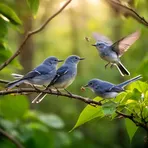
A group of small birds that eat insects and live in the Americas
How Small

Surface Forms
Morphology
Etymology
The word gnatcatcher is made of two simple words: gnat meaning 'tiny flying insect' and catcher meaning 'one who catches'. So, the name gives an easy picture of a very small bird that catches gnats and other insects.