
glycosuria


 1
9.5
- noun
- /ˌɡlaɪkoʊˈsjʊəriə/
- Specialized
- As a result of the glycosuria that is a feature of the mode of action of this drug, an increase in genitourinary infections such as vaginal thrush and urinary tract infections was seen.
- chronic glycosuria
Examples
-
The association between the nervous system and diabetes drew strength from experimental studies showing that the stimulation of nerves innervating the internal organs led to a release of adrenaline, which in turn caused the liver to break glycogen down into sugar and produce a mild glycosuria.
Academic text (2011) -
Patients with glycosuria often experience symptoms that require careful monitoring for potential kidney problems.
-
Urine testing shows glycosuria without ketosis, and again, treatment involves urgent hospital admission before a later review with the practice team to identify how this state occurred.
Academic text (2012) -
He was suffering from chronic arthritis and glycosuria, but his claim was dismissed because his illnesses were not related to his military service.
Academic text (1990) -
12. The New York City physician Heinrich Stern agreed, commenting that "the Hebrews, no doubt, are more commonly afflicted with chronic glycosuria.
Academic text (2011) -
A history of diabetes is thought to exacerbate UTIs as glycosuria reduces phagocytosis and cellular immunity, encouraging bacterial adherence.
Academic text (2011) -
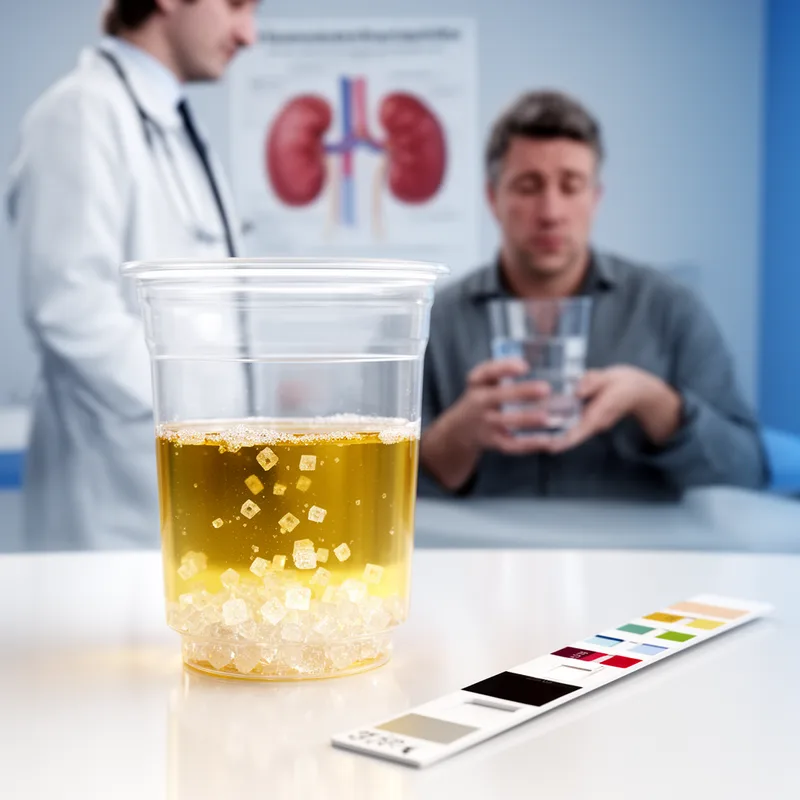
A urine test revealed that she had glycosuria, indicating a possible issue with her diabetes management.
-
The doctor explained that glycosuria can be a sign of uncontrolled diabetes if sugar levels remain high.
Synonyms

Sugar in the urine that often shows diabetes or other health problems
Surface Forms
Morphology
glycosuria = glycos + ur + ia
The medical combining forms for sugar and urine combine straightforwardly, and the definition mainly adds the clinical detail that the amount is abnormally high.
Etymology
Glycosuria breaks into glyco- meaning 'sweet' (the same root you see in glucose) and -uria meaning 'urine', so it literally means 'sweet urine' and is used for having sugar in the urine, often a sign of diabetes.