
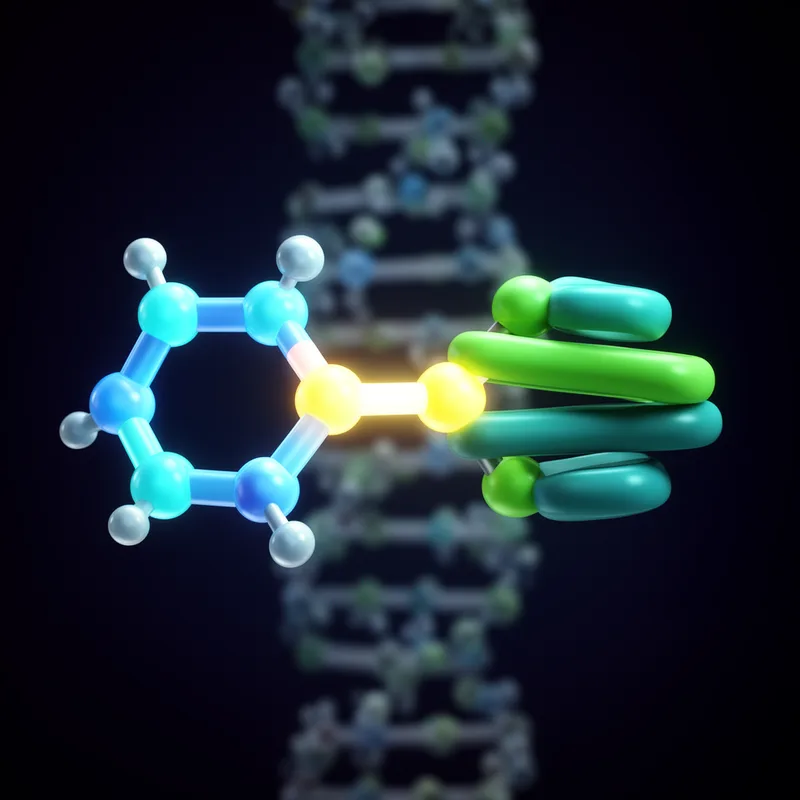
glycosidic


 1
8.8
- adjective
- /ɡlaɪˈkoʊsɪdɪk/
- Specialized
- Basically, they are endoglucanases that cleave an internal glycosidic bond.
Examples
-
So there's this glycosidic bond here between the base and the carbon here of the ribose.
-
In plants, carbohydrates are often stored in the form of glycosidic linkages that connect sugar molecules.
-
And these monomers are joined together by a special covalent bond that's called a glycosidic bond Co C.
-
The enzyme catalyzes the formation of a glycosidic bond between the sugar and the nitrogenous base.
-
The genetic information in DNA is encoded by the sequence of bases connected by glycosidic bonds.
Synonyms
Relating to a sugar part attached to a molecule
Surface Forms
Morphology
Etymology
Glycosidic comes from the root glyco-, from a Greek word meaning 'sweet' and 'sugar', and from glycoside, a name for a part where a sugar is attached to another part. So, glycosidic describes the 'sugar' bond or link that joins a sugar to something else.