
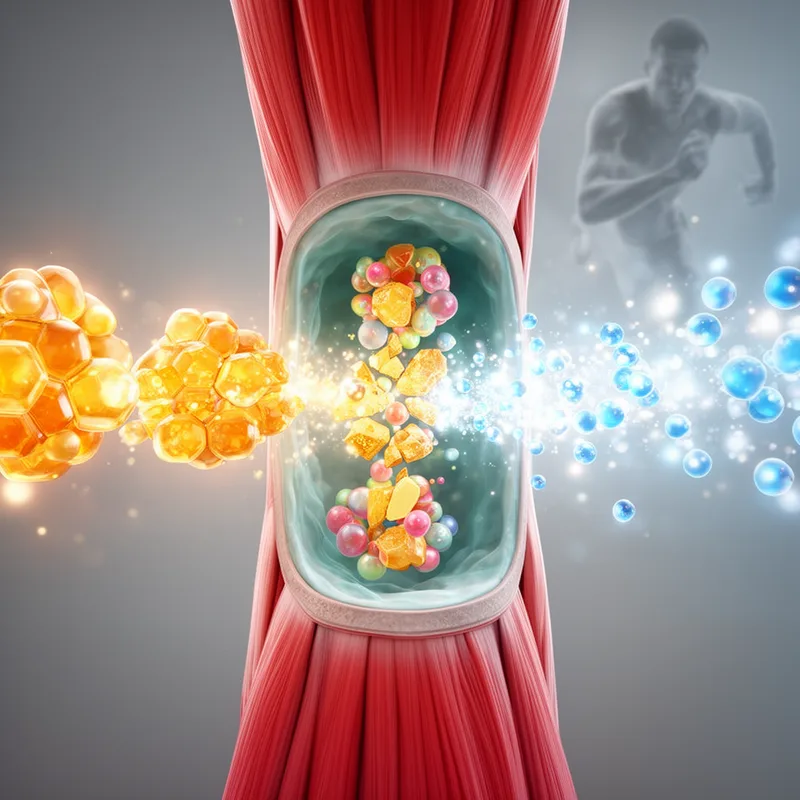
glycolytic


 1
7.6
- adjective
- /ɡlaɪˈkɒlɪtɪk/
- Specialized
- Type II glycolytic fibers are needed for quick muscle activities, such as sprinting and jumping.
- glycolytic pathway
- glycolytic fibers
Examples
-
But keep in mind that now the entire glycolytic reaction, how much is our net profit now?
-
They have said many times that if you do high-intensity work that uses the glycolytic pathways, you need carbs.
Blog text (28) -
So cancer cells are increasing their glycolytic pathway is causing pH to drop.
-
So the yeast you're able to monitor the to sort of have a control on how fast sugar flows through this glycolytic pathway.
-
Structures were also worked out early on for all of the enzymes from the glycolytic pathway, which generates energy from sugars.
Academic text (1995) -
Type II fast-twitch glycolytic fibers are anaerobic and do not require oxygen for metabolism.
Academic text (2005) -
When you're sprinting, what you're doing you're using carbohydrated fuel, you go on glycolytic and you spike in your heart rate.
-
There are two types of muscle fibers: Type I, or slow twitch-oxidative red fibers, and Type II, fast twitch-glycolytic fibers.
Academic text (2005) -
The pathways used to generate ATP may be a secondary consequence, and oxidative to glycolytic metabolic reprogramming might reflect biochemical requirements other than energetics.
Academic text (2016) -
The athlete primarily relies on glycolytic energy systems during high-intensity interval training.
Surface Forms
Morphology
glycolytic = glycolysis (transparent) = glycolysis + lytic
Regular adjectival derivation from the noun 'glycolysis' using the productive suffix '-lytic' to mean 'relating to glycolysis'.
Etymology
Glycolytic comes from the parts glyco- meaning 'sugar' and -lysis meaning 'breaking'. So it means 'breaking sugar', which fits because glycolytic processes break glucose to make quick energy in cells.