
glycogenic
9.6
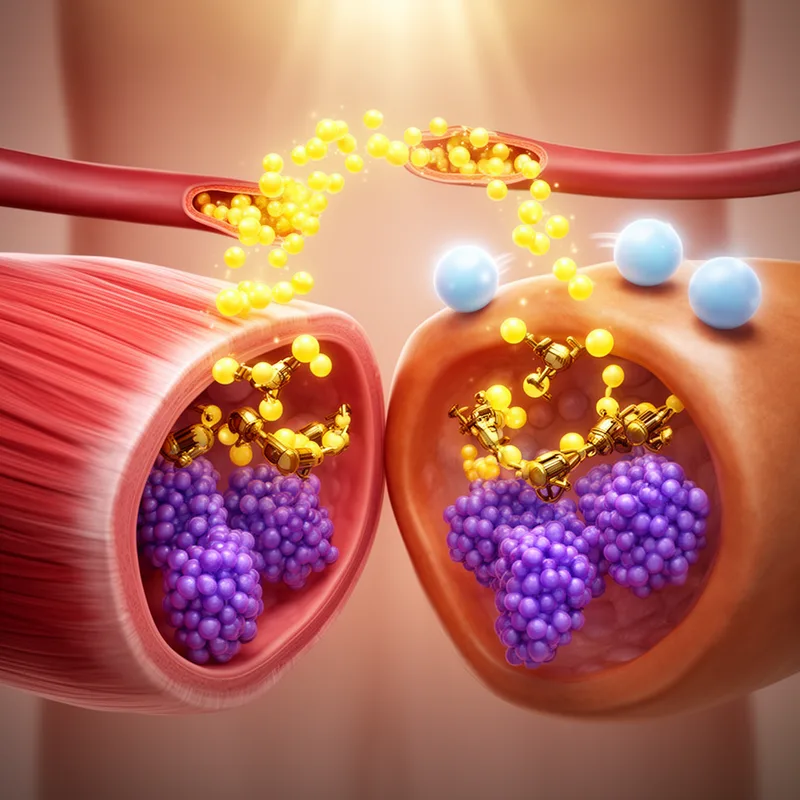
Involving making or storing glycogen in body tissues
- adjective
- /ˌɡlaɪkəˈdʒɛnɪk/
- Specialized
:
glucogénico
- Insulin stimulates glycogenic activity, allowing the liver to store glucose as glycogen.
Examples
-
Insulin promotes glycogenic activity in liver cells.
-
Certain enzymes play a key role in glycogenic pathways.
-
A glycogenic diet can help athletes restore muscle energy.
-
The glycogenic process is essential for energy storage.
-
She studied the glycogenic functions of the liver.
-
A glycogenic diet can help athletes restore muscle energy after intense training.
-
Certain enzymes are crucial for the glycogenic pathways that convert glucose into stored energy.
Surface Forms
glycogenic positive
Morphology
Etymology
Glycogenic comes from the Greek parts glyco- meaning 'sugar' and -genic meaning 'producing'. So glycogenic describes processes that make or store sugar in the body, for example the creation of glycogen in the liver and muscles.

