
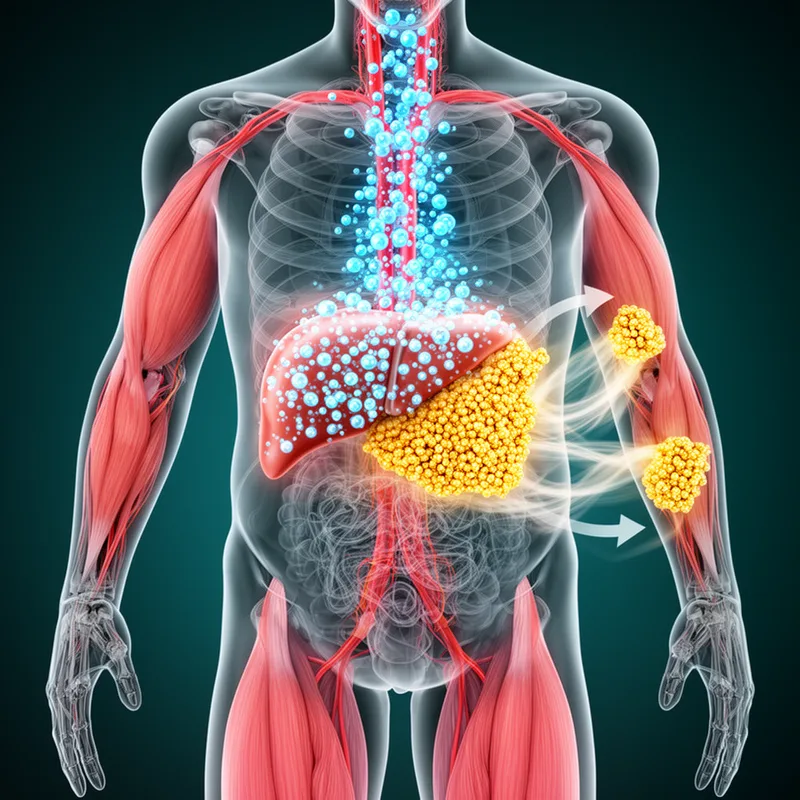
glycogenesis
- noun
- /ˌɡlaɪkəˈdʒɛnɪsɪs/
- Specialized
- During glycogenesis, glucose is transformed into glycogen.
Examples
-
The rate of glycogenesis increases when blood glucose levels are high.
-
Liver cells play a key role in glycogenesis during energy storage.
-
After a meal, glycogenesis occurs in the liver, storing excess glucose as glycogen.
-
The process of glycogenesis is crucial for energy storage.
-
After a meal, glycogenesis occurs in the liver, storing excess glucose as glycogen.
-
The rate of glycogenesis increases when blood glucose levels are high.
-
Liver cells play a key role in glycogenesis during energy storage.
Surface Forms
Morphology
Etymology
Glycogenesis comes from the parts glyco- meaning 'sweet' or 'sugar' and -genesis meaning 'creation' or 'birth', and the part glyco- is the same as in glucose. So, glycogenesis means 'making stored sugar', which is why it describes the body's process of turning glucose into glycogen for storage in the liver and muscles.

