
glycogen
 5
6.8
5
6.8

- noun
- /ˈɡlaɪkəˌdʒɛn/
- Specialized
- What's left for energy is glycogen stored in your muscles, liver, and body fat.
- glycogen content
- glycogen depletion
- increase in glycogen
Loading YouTube…
Watch on YouTubeThe way that you would leverage muscle glycogen would be through exercise.
- The way that you would leverage muscle glycogen would be through exercise.
- Is there any evidence that fruit is not good at replenishing glycogen as compared to starch?
- You've told us under those conditions, muscle glycogen and maybe even liver glycogen is going to be depleted.
- Another mutase you will encounter is in the glycogen breakdown pathway.
Examples
-
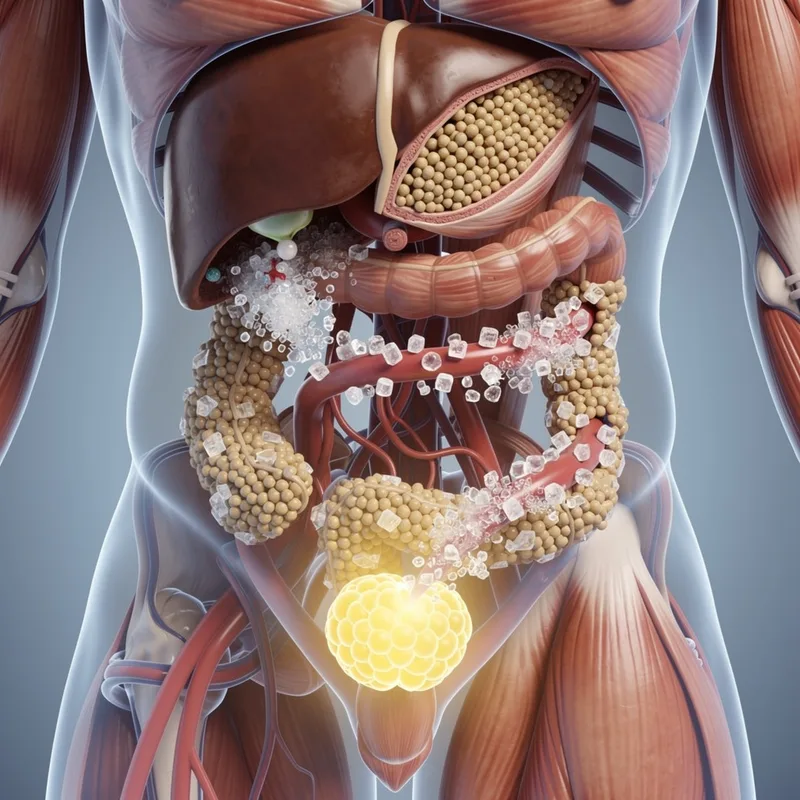
We have storage in our muscles and in our liver for carbs called glycogen.
-
Skipping breakfast misses the opportunity to replenish those glycogen levels to 100% to last until lunch.
Blog text (27) -
However, any form of exercise will burn through the glycogen you need to look full, round, and hard.
Blog text (25) -
The way that you would leverage muscle glycogen would be through exercise.
-
In order to fuel these tasks, the body pulls glycogen from the liver for energy.
Blog text (32) -
If you engage in exercise, your muscles become better at storing glycogen to fuel them.
Blog text (30) -
Whatever glucose your body doesn't need immediately gets converted into glycogen for storage in your liver.
Blog text (18) -
When an athlete wakes up in the morning, their glycogen levels are at 40-60%.
Blog text (27) -
Our bodies can and do convert fat into glycogen when we don't have an excess of carbs.
Blog text (10) -
After a long workout, your body relies on glycogen stored in your muscles for quick energy.
Synonyms

A form of sugar stored in animal liver and muscles for energy
Surface Forms
Morphology
glycogen = glyco + gen
The parts are Greek combining forms (glyco- 'sugar' and -gen 'producer/substance') used in scientific terminology and are not standalone English words, so the meaning 'animal starch stored in the body' is not directly inferable for an average learner.
Etymology
Glycogen comes from Greek parts glyco- meaning 'sweet' and -gen meaning 'to produce', like the English word generate. So glycogen is like 'produced sugar' — the sugar the body stores and can turn into glucose for energy.