
glutenin


 1
7.5
- noun
- /ˈɡluːtənɪn/
- Specialized
- Gluten's attainable elasticity is proportional to its content of glutenins with low molecular weights, as this portion contains the preponderance of the sulfur atoms responsible for the cross-linking in the network.
Examples
-
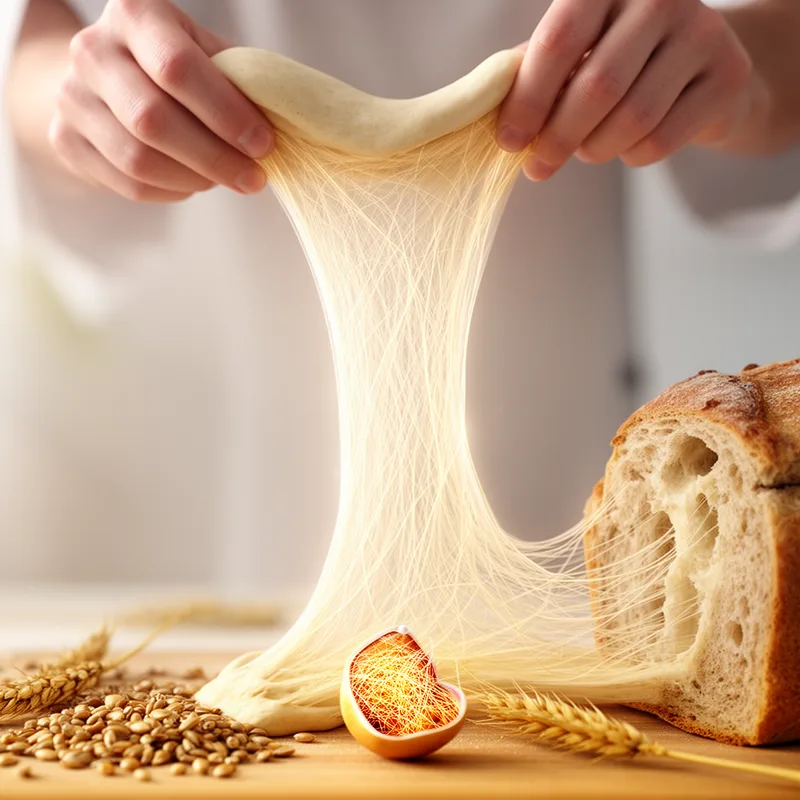
Gluten forms when glutenin molecules cross-link to form a sub-microscopic network attached to gliadin, which contributes viscosity (thickness) and extensibility to the mix.
Blog text (25) -
Gluten, found in wheat, rye, and barley, is a composite of the proteins gliadin and glutenin.
Blog text (29) -
It's really high in protein and it has a little bit of gluten proteins, the glutenin and the gliadin that you find in wheat.
-
The feat involves transferring certain glutenin protein genes from bread wheat to durum wheat.
Academic text (1999) -
So in gluten there are these glutenin strands and gliadidin strands and they are going to bind together.
-
The gluten in bread is produced by the interaction of glutenin and gliadin proteins.
-
In baking, glutenin is essential for giving the dough its elasticity and structure.
-
Molecular studies have shown that glutenin proteins play a crucial role in the texture of baked goods.
Surface Forms
Morphology
Etymology
Glutenin comes from gluten, which in Latin means 'glue', plus the protein ending -in. So, glutenin is the 'protein' part of gluten that acts like 'glue' in dough, making it stretchy and giving bread its chewy texture.