
glucosidase


 1
8.9
- noun
- /ɡluːˈkoʊsɪdeɪs/
- Specialized
- The cells were snap-frozen and stored at -80 degrees C for future confirmation of the activity of the acid β-glucosidase enzyme.
- β-glucosidase
- acid glucosidase
- glucosidase activity
Examples
-
In still another screening, microbiologist Badal C. Saha has identified a yeast that produces a heat-stable beta-glucosidase that works in environments high in glucose.
Academic text (1996) -
Alpha-glucosidase inhibitors such as acarbose.
Academic text (2012) -
This dose thus appears to be sufficient to restore acid β-glucosidase activity to normal in the glycolipid-laden macrophages.
Academic text (1996) -
Infusion of alglucerase at a dose of 5 U/kg body weight normalized acid beta-glucosidase activity of splenic Gaucher's cells in vivo.
Academic text (1996) -
Hamaker and his colleagues conducted inhibition studies on starch degradation products and the alpha-glucosidase enzymes in a simulated gastrointestinal tract system.
Blog text (20) -
Serial blood samples over 40 minutes after tracer injection were assayed for radioactivity and acid β-glucosidase activity, but scintigraphic scanning was not practicable.
Academic text (1996) -
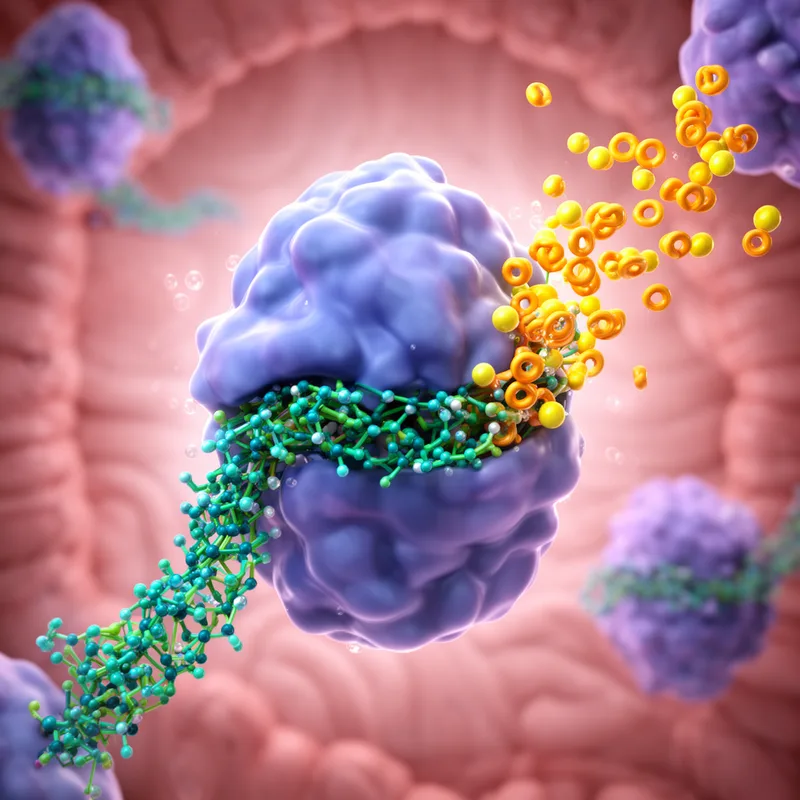
Enzymes like glucosidase help convert complex carbohydrates into simpler sugars that the body can use.
-
The presence of glucosidase in the digestive system is crucial for breaking down starches into sugars.
-
When glucosidase is active, it hydrolyzes glycosidic bonds, assisting in the digestion of carbohydrates.
Surface Forms
Morphology
Etymology
Glucosidase comes from gluco- meaning 'sweet' or 'sugar', the same root as glucose, and the enzyme ending -ase, as in lactase. So glucosidase is an enzyme that 'breaks down' sugar chains into simple sugars, which is exactly what the word means today.