
to glass in
 1
6.7
1
6.7

- phrasal verb
- The top floor is glassed in on four sides, and spider plants dangle with more exotic ferns above the water.
- pane of glass in
- glass in a window
- glass in the door
Loading YouTube…
Watch on YouTubeYou know, big square, kind of glassed in spot operate.
- You know, big square, kind of glassed in spot operate.
Examples
-
The room was originally an open porch; first it was screened in, now it is glassed in.
Fiction book (1991) -
The restaurant has a beautiful glassed-in patio that allows diners to enjoy the view while staying warm.
-
Patrick's on a ladder replacing glass in the upper windows.
Fiction book (2001) -
The house had a front porch that looked like it had been glassed in during the smog crisis of the early 2000s, and the inside door, which was obviously from the same period, was made of steel.
Fiction book (1999) -
On the horizon, at the end of the street, Houston's glassed-in banks tower together like slats in a cyclone fence.
Fiction book (1999) -
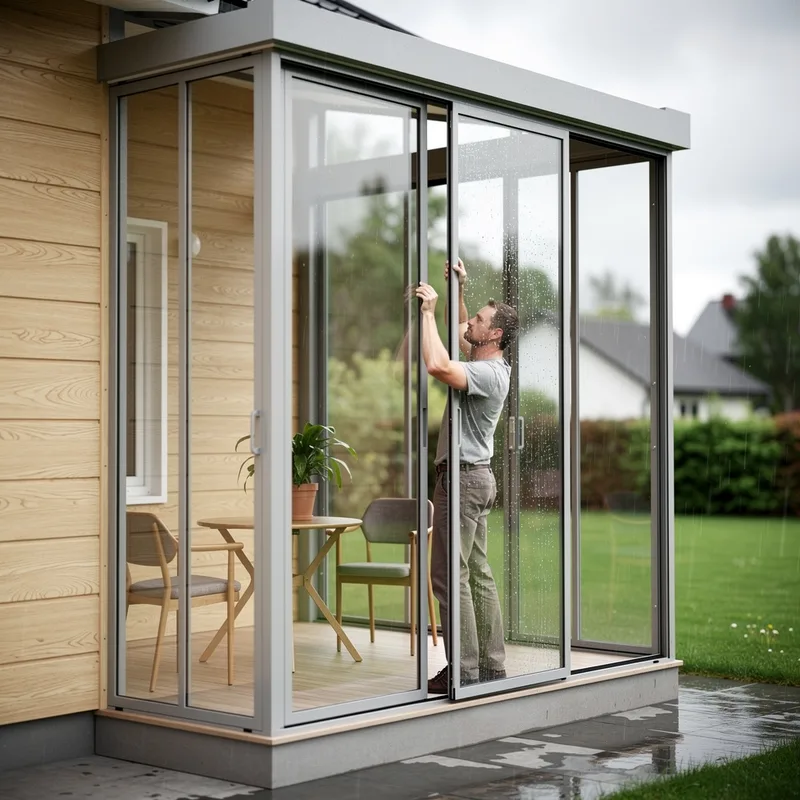
They glassed in the porch to create a cozy sunroom for relaxing on chilly days.
-
After they glassed in the balcony, it became a popular spot for morning coffee.
Synonyms


How Enclosed
1
6.7
 84
3.7
84
3.7
Surface Forms
Morphology
The meaning 'to enclose or surround with glass' is directly derivable from combining the verb 'glass' (to fit or install glass) with the particle 'in' (indicating interior/enclosure). This verb+particle composition follows a regular, productive English pattern and has clear cross-linguistic parallels, so a B1 learner who knows the constituents would likely infer the meaning.
Etymology
The phrasal verb glass in comes from the simple image of fitting glass in around a space, like turning a balcony into a glass box to keep wind and rain out. That's why it now means 'to enclose with glass'.