
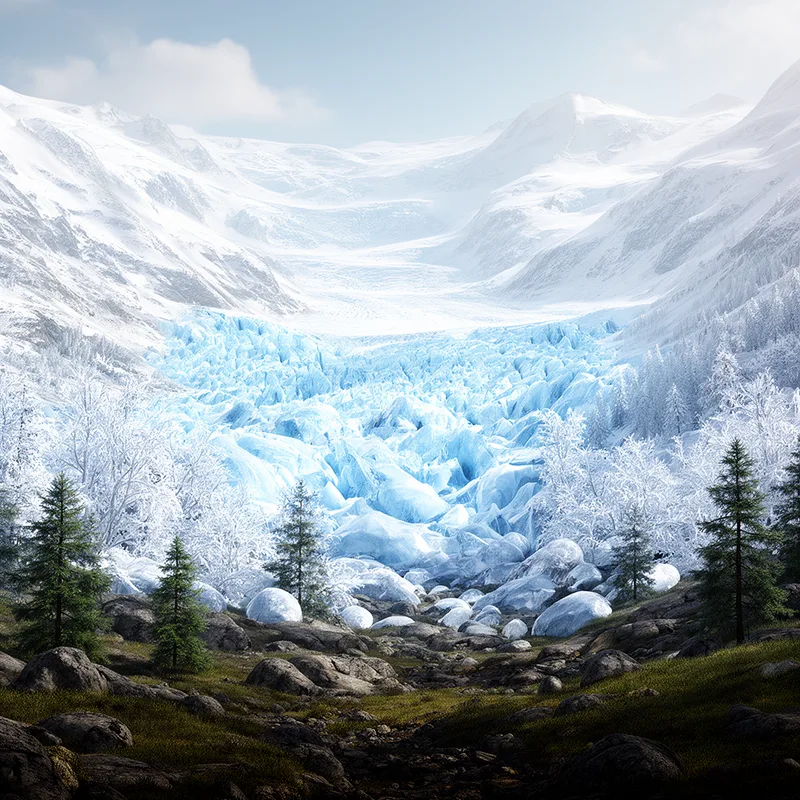
to glaciate
 1
9.9
1
9.9

- verb
- /ˈɡleɪʃiˌeɪt/
- Specialized
- glaciated peak
- glaciated terrain
- heavily glaciated
Examples
-
The region around Mount Monadnock was still glaciated as late as 12,000 years ago.
Academic text (2011) -
The glaciated peaks in the distance all around wetted the dust and stones in a circle around him.
Fiction book (1991) -
It receded so much that the point where we stood at the edge of the lake had been glaciated only 150 years before.
Fiction book (1994) -
Like most glaciated regions in temperate zones, the dry valleys have been subject to vast climate changes that have caused glaciers to advance and retreat.
Academic text (1999) -
Lifeboats crowded with loyal crew members fanned out over the glaciated surface of the alien planet, seeking refuge, and scattered among them were other, larger shapes.
Fiction book (1992) -
Be content to live within my brain—a metaphor made frozen flesh—my fate, at very worst, to sit and glaciate in ponderous senility.
Fiction book (1994) -
In 1984, they began fighting a limited war for possession of a wedge-shaped piece of high-altitude, uninhabited, and heavily glaciated terrain located adjacent to the border with China at the northernmost edge of Kashmir.
Academic text (1995) -
The landscape was gradually beginning to glaciate as temperatures dropped and ice started to form.
-
As the climate cooled, areas of the Earth began to glaciate, altering the geography dramatically.
-
Scientists predict that many regions will glaciate again if global temperatures continue to decrease.
Synonyms
 2
3.4
2
3.4
Get covered in ice, for example a pond or window

To cover land with moving ice or to shape it by that ice
Surface Forms
Morphology
glaciate = glacier (transparent) = glaci + ate
The verb is directly formed by adding the productive verb-forming suffix '-ate' to the ice-related base (glacier/glacial), so the meaning is directly predictable.
Etymology
Glaciate comes from the Latin word glacies, which means 'ice', and it is the same root as glacier and glacial. So, to glaciate is to 'become covered with ice' or to 'become like a glacier'.