
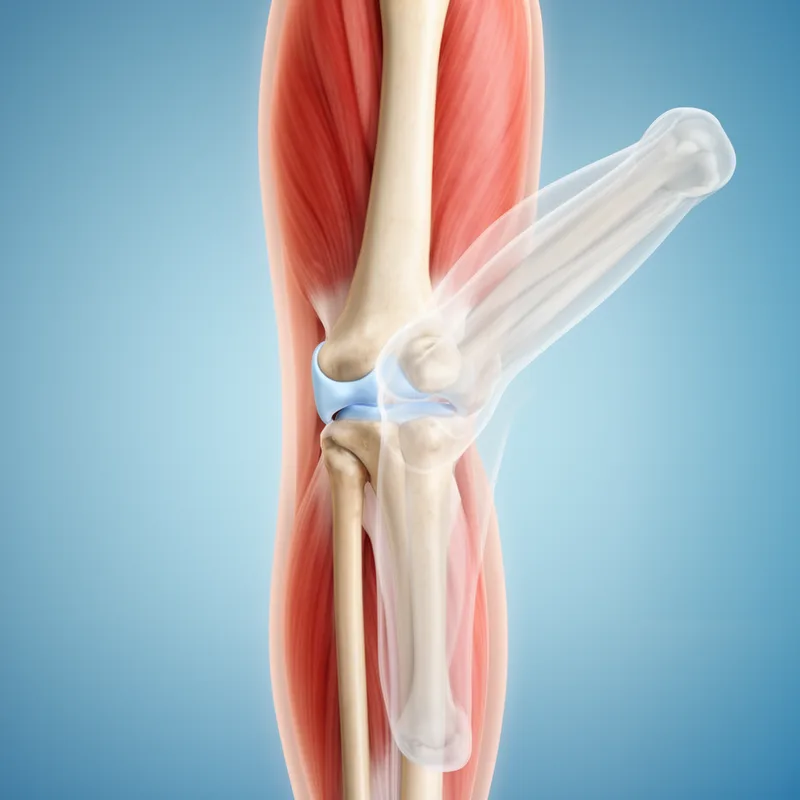
ginglymoid joint
- noun
- /ˈdʒɪŋɡlɪmɔɪd dʒɔɪnt/
- Specialized
- The elbow is a classic example of a ginglymoid joint in the human body.
Examples
-
Surgeons must be careful when operating on a ginglymoid joint to preserve its range of motion.
-
The ginglymoid joint allows for bending and straightening.
-
Damage to a ginglymoid joint can severely limit movement in one direction.
-
A ginglymoid joint is found in the elbow.
-
The elbow is a classic example of a ginglymoid joint because it allows extensive movement in one direction.
-
Surgeons must be careful when operating on a ginglymoid joint to ensure that it functions properly.
-
Damage to a ginglymoid joint can limit movement, making it difficult to perform everyday tasks.
Synonyms


 1
9.9
1
9.9
A joint that bends and straightens mainly in one direction, like the elbow
 1
4.3
1
4.3
A joint that lets a body part move mainly in one direction like a knee or elbow
Antonyms


How Movable

Surface Forms
Morphology
ginglymoid + joint
The headword 'ginglymoid' is a rare, technical Greek-derived term (meaning essentially 'hinge-like') that a B1 learner is very unlikely to know or be able to parse from common English morphology; knowing 'joint' alone does not reveal the specific hinge-like sense. Because the first constituent is obscure and the term is specialized anatomical jargon, the overall meaning cannot be predicted by an average B1 learner and thus is opaque.
Etymology
Ginglymoid joint comes from a word that means hinge, so imagine a joint that swings like a door hinge. So it means a joint that lets movement mainly in one direction, like the elbow.