
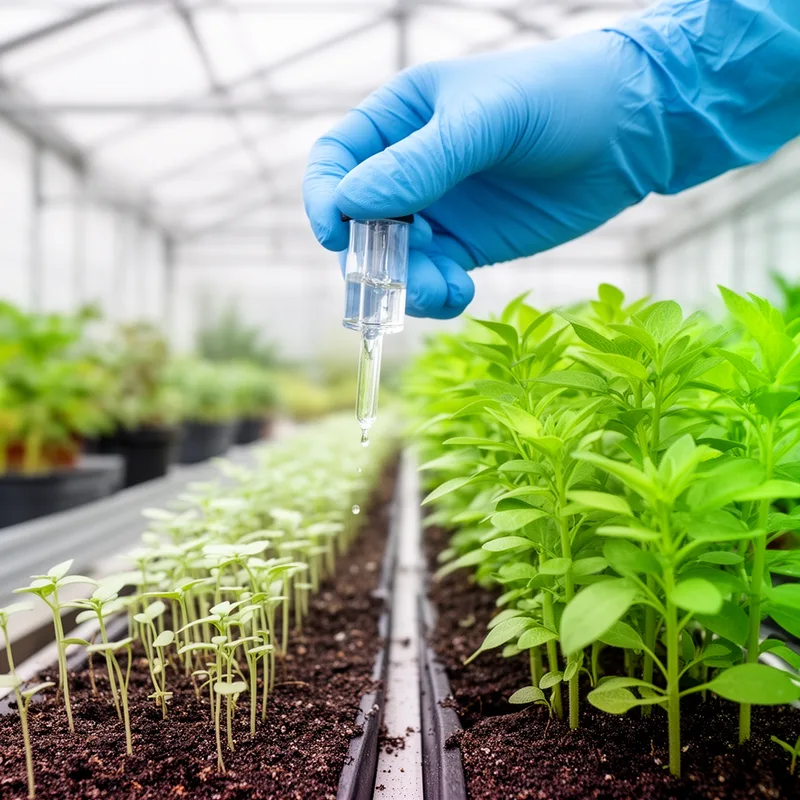
gibberellic acid


 1
6.5
- noun
- /ˌdʒɪbərˈɛlɪk ˈæsɪd/
- Specialized
- The researcher applied gibberellic acid to stimulate rapid growth in the laboratory plants.
Examples
-
Farmers utilize gibberellic acid to increase crop yields by promoting better development and flowering.
-
An example: He wants to see whether compounds called growth regulators, like cytokinins or gibberellic acid, can coax plants to yield bigger—and seedless—berries.
Academic text (2006) -
Gardening experts often recommend using gibberellic acid to enhance the growth of fruit trees.
Synonyms
 1
3.8
A natural chemical in plants that controls their growth and responses
 1
9.5
A chemical in plants that makes stems grow taller and helps seeds start to grow and flowers form
Surface Forms
Morphology
gibberellic + acid
If a learner knows the constituents, they can transparently infer that this is a type of chemical 'acid' named for 'gibberellic' (i.e., related to gibberellin), so the categorical meaning (a kind of acid) is clear. However, the specific biological role as a plant hormone that stimulates growth is technical and not predictable from the parts alone, making the overall meaning only partially derivable.
Etymology
Gibberellic acid gets its name from a fungus called Gibberella that made rice seedlings grow very tall. When scientists found the growth chemical from that fungus, they named the acid after it, so today gibberellic acid is used to 'promote growth' in plants.