
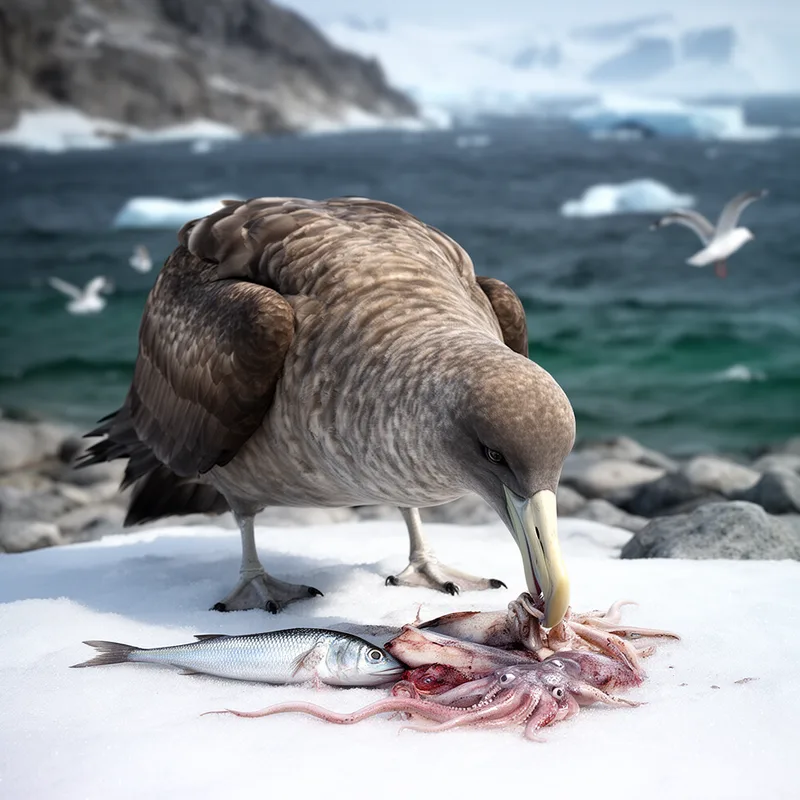
giant petrel
- noun
- Australian
- Many giant petrels can be seen in the Southern Ocean.
- southern giant petrel
Examples
-
Researchers observed several giant petrels nesting along the rocky coast.
-
During the expedition, we spotted a giant petrel soaring above the icy waters.
-
The giant petrel feeds on carrion as well as fish and squid.
-
The giant petrel is known for its impressive wingspan.
-
As we observed the coastline, a giant petrel soared gracefully above the waves, searching for food.
-
The researcher pointed out that the giant petrel is known for its impressive wingspan and scavenging behavior.
-
During our trip to Antarctica, we spotted several giant petrels nesting on the rocky cliffs along the shore.
Synonyms
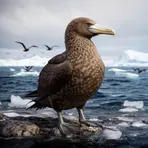
A large brown seabird that lives in Antarctic seas
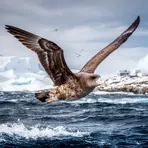
A large brown seabird that lives near Antarctica

The scientific name for a group of large seabirds that eat dead animals in the southern oceans
Surface Forms
Morphology
The meaning is directly compositional: 'giant' (very large) modifies 'petrel' (a type of seabird), so a B1 learner who knows both words can infer it denotes a very large petrel. This follows a transparent adjective + noun pattern common across languages and requires no idiomatic or metaphorical knowledge.
Etymology
Giant petrel is a plain descriptive name: petrel is the name for a seabird and giant shows this bird is much larger than other petrels. Because these large, brown birds often fly over Antarctic seas and feed on dead animals and fish, the simple image of a very big petrel explains the name today.

