

giant fulmar
- noun
- /ˈdʒaɪənt ˈfʌlmɑr/
- We spotted a giant fulmar circling the ice as we approached the research station.
Examples
-
The giant fulmar is a powerful flier commonly seen gliding over Antarctic waters.
-
The giant fulmar is known for its impressive wingspan.
-
Unlike smaller seabirds, the giant fulmar can endure the harshest Antarctic storms with ease.
-
Many giant fulmars migrate to warmer waters during winter.
-
The giant fulmar is a large brown seabird often seen soaring above the icy waters of the Antarctic.
-
During our expedition, we witnessed a giant fulmar elegantly gliding across the Antarctic sky.
-
Research teams often observe the giant fulmar nesting on rocky cliffs in the Antarctic region.
Synonyms
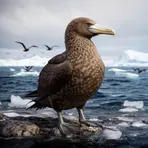
A large brown seabird that lives in Antarctic seas

A large seabird like a big seagull that lives near Antarctic seas and eats dead animals, fish, and squid

The scientific name for a group of large seabirds that eat dead animals in the southern oceans
Surface Forms
Morphology
The meaning is directly and compositionally derived from the adjective + noun combination: 'giant' (very large) applied to 'fulmar' (a type of seabird) yields 'a very large fulmar.' This follows a standard, cross-linguistic adjective–noun pattern, so a B1 learner who knows both constituents would readily infer the MWE's meaning.
Etymology
Giant fulmar pairs giant for its large size with fulmar, a word that may come from an old word meaning 'foul gull' because these birds defend themselves by spraying oily, smelly liquid. So, the name helps you picture a very large sea bird known for that smelly defense.

